
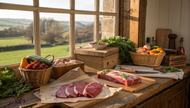
A Complete Guide to Ordering a Premium Meat Box from a Farm Shop
Posted by Copas Farm Shop on 22nd Jul 2026
Ordering a premium meat box from a farm shop means selecting a curated set of high-welfare, slow-grown cuts sourced directly from the farm, delivered chilled to your door. At Copas Farm Shop, boxes are built around pasture-raised beef, free-range chicken, free-range lamb, and heritage-breed turkey — dry-aged for depth of flavour and hand-prepared to order.
Key takeaways
- Premium farm shop meat boxes typically contain between 4 and 12 cuts, covering a mix of roasting joints, everyday portions, and a feature piece such as a whole bird or bone-in leg
- Dry-aged beef and slow-grown poultry develop measurably deeper flavour than wet-aged supermarket equivalents — dry-ageing draws out moisture and concentrates natural flavour compounds over 14–28 days
- Orders placed at least 7 days ahead of your intended delivery date give farm shops time to prepare, pack, and despatch on their chilled courier schedule
- A well-stocked premium meat box from a UK farm shop costs between £60 and £250 depending on size, species mix, and whether it includes whole birds or portioned cuts
- High-welfare labels to look for include RSPCA Assured, free-range, and pasture-raised — each carries a specific legal or accreditation standard in the UK
- Chilled delivery in insulated, ice-packed boxes keeps meat safe for transit windows of up to 24 hours; plan to refrigerate or freeze on the day of arrival
What is a premium meat box from a farm shop?
A premium meat box is a pre-selected or customisable collection of butchered cuts sent directly from a farm or farm shop to your home, chilled or frozen. Unlike a supermarket multi-pack, a farm shop box is assembled from animals reared on a named farm or small farming network, slaughtered locally, and prepared in-house or by a dedicated butcher.
The word "premium" in this context refers to three specific things: the rearing standard (slow-grown, pasture-raised, high-welfare), the processing method (dry-aged, hand-butchered, properly rested), and the traceability (you can typically identify the farm, the breed, and the rearing method before you order).
What types of meat boxes can you order from a farm shop?
Farm shop meat boxes generally fall into four categories: single-species boxes, mixed meat boxes, seasonal boxes, and whole-cut boxes.
Single-species boxes focus on one animal — a beef box might include a sirloin joint, short ribs, rump steaks, and mince and burgers. A lamb box commonly offers a half or whole lamb, broken down into shoulder, leg, rack, and chops, giving you the full range of that animal's cuts.
Mixed meat boxes combine beef, chicken, pork, and sometimes venison or lamb across a wider variety of cuts — suited to households that want flexibility week to week.
Seasonal boxes are timed to the farming calendar. Christmas turkey boxes, spring lamb collections, and summer barbecue boxes reflect what is genuinely at its best in that season rather than what the cold chain can hold year-round.
Whole-cut or large-format boxes are built around a centrepiece — a full sirloin, a side of beef, or a whole free-range turkey — and are designed for larger households, hospitality, or special occasions.
How do you choose the right meat box for your household?
The right box depends on three practical factors: the number of people you are feeding, how often you cook from scratch, and how much freezer space you have.
For a household of two adults cooking four times a week, a box containing 6–8 portions across two or three species (typically 3–4 kg total) is a practical starting point. Families of four to six are better served by a larger box in the 6–8 kg range, which covers roughly two weeks of evening meals.
Freezer space matters more than most buyers anticipate. A half-lamb box, for example, runs to around 10–12 kg of prepared cuts. Without at least one dedicated freezer drawer, you'll be cooking under time pressure to avoid waste.
Ask the farm shop whether the box is fixed or configurable. Some shops offer a standard selection; others let you swap cuts, specify portion sizes, or exclude items such as offal before despatch.
How much does a premium farm shop meat box cost in 2026?
A small single-species box (2–3 kg) from a reputable UK farm shop typically starts at £60–£80. A medium mixed box (4–6 kg) runs between £90 and £150. Large boxes, whole-animal selections, or boxes built around premium cuts such as aged ribeye or whole free-range turkey sit between £150 and £250.
Delivery adds £5–£12 for standard chilled despatch in most of England and Wales. Some farm shops offer free delivery above a minimum order threshold, typically £100–£120.
| Box type | Typical weight | Price range | Best for |
|---|---|---|---|
| Single-species (small) | 2–3 kg | £60–£80 | Couples, first-time buyers |
| Mixed meat (medium) | 4–6 kg | £90–£150 | Families, weekly cooking |
| Large or whole-animal | 8–14 kg | £150–£250 | Larger households, occasions |
| Seasonal / feature box | 3–5 kg | £80–£180 | Gifts, Christmas, celebrations |
Price per kilogram for premium farm-reared beef, lamb, or poultry will always be higher than a supermarket equivalent. That gap reflects welfare standards, slower growth rates, lower stocking densities, and the absence of bulk-processing efficiencies. Notably, at Copas the average across our farm meats range runs 30–40% higher per kilogram than comparable supermarket lines — a differential our customers consistently say is justified once they taste the difference.
What welfare and quality labels should you look for?
Four labels carry genuine regulatory or accreditation weight in the UK: RSPCA Assured, Red Tractor (farm assurance), Pasture for Life (100% pasture-fed ruminants), and Organic (Soil Association or equivalent).
RSPCA Assured sets specific welfare standards for housing, outdoor access, and slaughter. It applies to broiler chickens, pigs, turkeys, and salmon, among others.
Pasture for Life is the most rigorous certification for beef and lamb — animals must be reared entirely on grass and forage, with no grain supplementation. This directly affects fat composition, flavour, and the omega-3 to omega-6 ratio in the meat.
Red Tractor is a baseline assurance rather than a premium standard — it confirms legal compliance and traceability but does not require free-range or extensive rearing conditions.
Dry-ageing is not a certified standard but a production choice. A farm shop that dry-ages its beef for 21–28 days is committing to a process that reduces yield (moisture loss is typically 10–15%) in exchange for flavour concentration. That is a deliberate trade-off worth asking about when you order.
How to order a premium meat box from a farm shop: step by step
- Identify your species and cut preferences. Decide whether you want a single-species box, a mixed selection, or a seasonal feature. If in doubt, a mixed box is the most forgiving starting point.
- Check the farm shop's rearing standards. Look for specific welfare claims — "free-range", "pasture-raised", "slow-grown" — backed by a certification or a named farm. A genuine farm shop will tell you the breed and the rearing method.
- Select your box size based on household size and freezer capacity. Use the guidance above: roughly 500–700 g of raw meat per adult per meal as a baseline.
- Confirm the delivery schedule. Farm shops typically despatch on set days of the week (commonly Tuesday to Thursday) to avoid weekend handling. Check which delivery days serve your postcode.
- Place your order with at least 7 days' notice. This allows time for the shop to prepare, pack, and book a chilled courier slot. For Christmas or seasonal boxes, 4–6 weeks' notice is standard — many sell out well in advance.
- Arrange to be home on delivery day. Chilled boxes require a signature or a designated cool drop point. A box left on a warm doorstep for several hours compromises the cold chain.
- Refrigerate or freeze immediately on arrival. Chilled meat delivered in an insulated box should go straight into the fridge (below 5°C) or freezer. Do not leave it in the packaging overnight.
- Follow the farm shop's preparation guidance. Premium cuts, particularly dry-aged beef and free-range poultry, benefit from specific rest times and cooking temperatures. Most farm shops include preparation notes with every order.
What are the most common mistakes when ordering a premium meat box?
The most common mistake is ordering too much without adequate freezer space. A half-lamb or large beef box can occupy a full freezer drawer; buyers who don't measure this in advance end up cooking everything within three days or losing cuts to freezer burn.
Ordering too close to the delivery date is the second most frequent issue. Farm shops work to tight preparation and despatch windows. In our experience at Copas, the highest rate of unsuccessful seasonal orders comes from customers who place them within 48 hours of their preferred delivery date — particularly in December, when turkey boxes can sell out six weeks ahead.
A third common error is treating premium cuts the same as supermarket meat. Dry-aged beef benefits from a longer rest (10–15 minutes after cooking) and performs best when brought to room temperature before it goes near heat. Free-range poultry — particularly slow-grown birds — has less water content than intensively farmed equivalents, which means lower cooking temperatures and careful attention to resting time produce noticeably better results.
Premium meat box vs supermarket: which should you choose?
The honest answer depends on what you are optimising for: convenience and price, or traceability, welfare, and flavour.
| Factor | Farm shop meat box | Supermarket premium range |
|---|---|---|
| Traceability | Named farm, breed, rearing method | Variable — retailer-sourced |
| Welfare standard | Free-range, pasture-raised, RSPCA Assured | Red Tractor baseline in most cases |
| Ageing process | Dry-aged 14–28 days (typically) | Wet-aged in vacuum pack |
| Price per kg | £18–£45 depending on cut | £12–£30 depending on cut |
| Ordering lead time | 7+ days, fixed despatch days | Same day |
| Flexibility | Configurable cuts, seasonal availability | Fixed pack sizes |
For everyday quick meals, a supermarket works. For a Sunday roast, a celebration, or a household that wants to know exactly how its food was raised, a farm shop box is the more satisfying choice — and over time, the better-value one, because the flavour and yield from properly reared and aged meat means less shrinkage, less waste, and more satisfying meals per kilogram purchased.
Frequently Asked Questions
How far in advance should you order a Christmas turkey or seasonal meat box? Most UK farm shops advise ordering Christmas turkey and seasonal boxes 4–6 weeks in advance. Slow-grown, free-range turkeys are reared in fixed numbers each year and do not carry surplus stock — once they sell out, they are gone. Placing an order in late October or early November gives the best chance of securing your preferred size.
Is a frozen or chilled meat box better? Chilled is generally preferred for cuts you intend to use within 3–5 days of delivery; frozen suits households building a stock of meat over several weeks. The key is that premium meat is best frozen once, quickly, in its original packaging — repeated freezing and thawing degrades texture and causes moisture loss.
What is dry-ageing and why does it matter? Dry-ageing is a controlled process in which meat is stored uncovered in a refrigerated environment at specific temperature and humidity levels for 14–28 days. Enzymes break down muscle fibres, tenderising the meat, while moisture evaporates and concentrates flavour. The result is a richer, nuttier taste and a more tender texture than wet-aged vacuum-packed alternatives.
Can you customise what cuts come in a farm shop meat box? Many farm shops offer configurable options — you can often request specific cuts, adjust portion sizes, or exclude items such as offal or bone-in pieces. It is worth contacting the shop directly before placing a fixed-selection order if you have specific preferences.
How is a premium meat box delivered, and is it safe? Farm shop meat boxes are packed in insulated cardboard with gel ice packs or dry ice, maintaining a temperature below 5°C for up to 24 hours of transit. Reputable shops use dedicated chilled courier networks rather than standard parcel services. The Food Standards Agency recommends refrigerating or freezing chilled meat immediately on receipt.
What breeds are best for flavour in a farm shop beef box? Traditionally regarded high-flavour breeds for beef include Hereford, Aberdeen Angus, Longhorn, and Dexter. Breed alone does not determine flavour — rearing method, diet, and ageing process contribute more significantly — but heritage breeds that grow more slowly tend to carry more intramuscular fat (marbling), which translates directly to depth of flavour when cooked.
How long does farm shop meat last in the fridge once delivered? Chilled, vacuum-packed cuts delivered on the day of despatch typically carry a use-by date of 3–7 days from delivery. Joints and whole birds should be used within 3–5 days; mince and burgers within 1–2 days. When in doubt, freeze on the day of arrival and defrost as needed.
Is a premium meat box worth the higher cost compared with a supermarket? For most households that cook from scratch regularly, yes. Dry-aged, pasture-raised meat has lower water content than intensively farmed alternatives, which means less volume loss during cooking — a premium joint that loses 10% of its weight in the pan outperforms a cheaper one that loses 25–30%. Factoring in yield, the price-per-serving gap narrows considerably.