
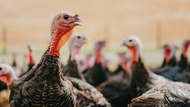
Free-range turkeys: what they are, how they're raised, and why they taste better
Posted by Copas Farm Shop on 8th Oct 2026
A free-range turkey is a bird raised with continuous daytime access to outdoor pasture, space to roam, and a slower growth rate than intensively farmed alternatives, all of which contribute directly to better flavour, firmer texture, and higher welfare standards. At Copas Farm Shop in Buckinghamshire, free-range turkeys have been slow-grown on open pasture since 1957, hand-plucked and dry-aged before reaching the table.
Key takeaways
- Free-range turkeys must have continuous daytime access to outdoor pasture under UK welfare regulations; this is not a marketing label but a legal standard.
- Slow-growing turkey breeds take significantly longer to reach maturity than intensively reared birds, developing denser muscle and deeper flavour.
- Dry-ageing after plucking draws out moisture, concentrates flavour, and improves texture, a step skipped by most supermarket suppliers.
- Free-range standards apply to other birds too, including ducks and chickens, though the specific welfare requirements differ slightly by species.
- Ordering early matters: premium free-range turkeys from family farms frequently sell out before the Christmas season, often months in advance.
What does "free-range turkey" actually mean?
A free-range turkey is one that has had continuous access to outdoor pasture during daylight hours throughout its rearing period. In the UK, the term carries a legal meaning under poultry welfare regulations; it is not simply a marketing phrase that any producer can attach to a product.
Under UK rules, free-range turkeys must have access to open-air runs for at least half their lifetime. The indoor housing must also meet minimum space requirements, ensuring birds are not crowded. Birds kept in large barns without outdoor access cannot legally be labelled free-range.
The welfare difference between free-range and intensively farmed turkeys is significant. Intensively reared birds are often kept in high-density sheds, selected for rapid weight gain, and slaughtered at a younger age. Free-range birds move more, build stronger muscles, and develop the flavour that slower, more active growth produces.
How are free-range turkeys raised on the farm?
Free-range turkey rearing begins with breed selection. Traditional and heritage-breed birds grow more slowly than fast-growing commercial strains; this is a deliberate choice, not a limitation. The slower growth period gives muscle fibres time to develop, which is what creates the texture and depth of flavour you notice when you carve.
Chicks are raised under heat lamps in sheltered housing before being introduced to pasture as weather allows. Once outside, they forage across open grassland, supplementing their feed with whatever the ground offers. This varied diet and physical activity shape the final flavour of the bird in ways that barn rearing simply cannot replicate.
At Copas Farm Shop, turkeys are slow-grown on Buckinghamshire pasture, hand-plucked after slaughter, and then dry-aged. Dry-ageing, hanging the bird in a cool, ventilated space for a period after slaughter, draws out surface moisture, concentrates flavour, and allows the meat to relax and tenderise. Copas Farm Shop's experience across nearly seven decades shows that most supermarket turkeys bypass this step entirely, which is one of the clearest explanations for the flavour gap between farm and shop.
What is organic free-range, and is it better than standard free-range?
Organic free-range turkeys meet all the requirements for free-range rearing and go further: the birds must be fed certified organic feed (free from synthetic pesticides and GM ingredients), and the land they roam must be managed organically. Organic certification in the UK is granted and audited by bodies such as the Soil Association.
Whether organic is "better" than standard free-range depends on your priorities. The welfare and outdoor-access standards are comparable. The main difference is in feed composition and land management. Some people value the assurance around pesticide use; others find that a well-managed, pasture-reared free-range bird without organic certification delivers equivalent flavour and welfare.
How to prepare a free-range turkey: step-by-step guide
A free-range, dry-aged turkey needs less fuss than a supermarket bird. The flavour is already there; your job is not to add it but to protect it.
- Remove from packaging and refrigerate unwrapped for the last 24 hours before cooking. This continues the drying process and helps the skin crisp during roasting.
- Bring to room temperature for at least one hour (for a large bird, up to two hours) before it goes into the oven. A cold bird placed straight into heat cooks unevenly.
- Season simply. Salt, butter, and fresh thyme inside the cavity are enough. A bird with real depth of flavour doesn't need masking.
- Roast breast-side down for the first third of the cooking time, then turn. This keeps the breast meat moist while the legs, which need longer, continue cooking.
- Rest generously. A large free-range turkey should rest for at least 45 minutes, loosely tented with foil, before carving. The juices redistribute and the meat relaxes.
- Carve against the grain for the most tender slices. Free-range birds have firmer, denser meat than intensively reared birds, carving technique matters more.
How do I choose the right size free-range turkey for Christmas?
A general rule used across UK turkey farms: allow roughly 500g of bird weight per person. This accounts for the bone weight and gives each guest a generous portion with leftovers, which, with a flavourful free-range bird, are genuinely worth planning for.
A 5kg bird suits a table of around eight to ten. A 7kg bird will comfortably feed twelve. If you're catering for a larger gathering, two smaller birds are often easier to manage than one very large one — they cook more evenly and take less time.
When ordering from Copas free-range turkeys, the farm provides clear guidance on size and weight ranges. It's worth being specific about your guest count when you order, as most farms will help you choose the most suitable bird for your table.
Frequently Asked Questions
What does "free-range" mean on a turkey label in the UK? In the UK, "free-range" is a legally defined term for poultry. Free-range turkeys must have continuous daytime access to outdoor runs for at least half their lifetime, and indoor housing must meet minimum space standards. Birds kept entirely in barns cannot legally carry the free-range label.
Why does a free-range turkey taste better than a supermarket one? Flavour develops through slower growth, outdoor movement, and post-slaughter handling. Free-range turkeys grow more slowly, build denser muscle through activity, and are typically dry-aged after plucking — a step that concentrates flavour and improves texture. Most supermarket birds are wet-processed and slaughtered at a younger age, which produces blander, looser-textured meat.
What is organic free-range turkey, and is it worth paying for? An organic free-range turkey meets standard free-range welfare requirements and is additionally fed certified organic feed on organically managed land. The main benefit over standard free-range is the assurance around feed inputs and land management. Whether the premium is worth it depends on your priorities around pesticide use and certification — the welfare and flavour differences between well-managed free-range and organic free-range are less dramatic than the price gap might suggest.
When should I order a free-range Christmas turkey? October is the reliable window for ordering from premium farms. Quality free-range turkeys from small producers are available in limited numbers and sell out well before December. At Copas Farm Shop, birds regularly sell out ahead of the season, ordering early is genuinely advisable, not just promotional language.
How do I store a fresh free-range turkey before Christmas? A fresh, dry-aged free-range turkey should be kept in the coldest part of your fridge, ideally unwrapped or loosely covered, and used within the number of days your farm specifies on delivery. Remove any giblets separately and store them for stock. Never leave the bird at room temperature for extended periods before the day you intend to cook it.
Does Copas Farm Shop sell other free-range meat besides turkey? Yes. Alongside free-range turkeys, Copas Farm Shop offers a range of premium meats including free-range lamb, chicken, beef, and other farm meats, raised with the same commitment to welfare and flavour that underpins the turkey operation.