
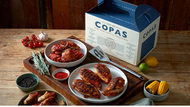
Meat Boxes: what to know before you order a meat box delivery
Posted by Copas Farm Shop on 23rd Sep 2026
A meat box is a curated selection of cuts of beef, lamb, chicken, pork or mixed, delivered chilled or frozen directly to your home. You choose a box by animal, size or occasion, pay online, and the meat arrives packed to stay cold, ready to go straight into your fridge or freezer.
Key takeaways
- Meat boxes typically contain between 3 kg and 10 kg of meat, suited to households of two up to large families or bulk buyers.
- Free-range and high-welfare labels are not the same as organic, organic certification requires a separate accreditation process.
- Pasture-raised and dry-aged meat generally delivers deeper flavour than supermarket equivalents raised in intensive systems.
- Sausages and other cured or seasoned products in a box count as processed meat; fresh, unseasoned cuts do not.
- Gamey meats such as venison, rabbit, mutton, wild boar, are less common in mainstream retail but increasingly available through farm shops and specialist online suppliers.
- Ordering direct from a farm or farm shop, such as Copas, often means the supply chain is shorter, and the provenance is traceable to a named farm.
What is a meat box and how does it work?
A meat box is a pre-selected or customisable collection of cuts, sold by weight or box size, and delivered to your door. The retailer packs the meat in insulated boxes with ice packs or dry ice to keep it chilled in transit. Some boxes contain fresh meat with a short fridge life; others are frozen and will keep for several months.
You choose based on what suits your household: a single-protein box (an all-lamb box, for example), a mixed box across several animals, or a special occasion box built around a centrepiece like a whole free-range turkey. Delivery is usually next-day or a scheduled slot, and most suppliers include cooking guidance.
The key advantage over a supermarket is traceability. With a farm or farm shop, you typically know the breed, how the animal was reared, and where it was processed. That information is rarely available on a supermarket shelf.
What should you check before ordering a meat box?
Welfare standards. Look for specific claims, free-range, pasture-raised, high-welfare, and check whether they're verified by a third party such as the RSPCA Assured scheme or the Soil Association. Vague language like "outdoor-reared" without certification can mean many things.
Fresh or frozen. Fresh meat has more flexibility for cooking immediately but a shorter window. Frozen is practical for bulk orders — you defrost only what you need. Check whether the supplier freezes before dispatch or sends fresh, as this affects delivery timing and storage planning.
Cut selection. A good box should match how your household actually cooks. A box heavy in braising cuts suits slow-cooking; one built around steaks and chops suits grilling. Read the contents list carefully before you buy.
Delivery packaging. The packaging must keep the meat below 5°C throughout transit. Responsible suppliers use insulated liners with sufficient coolant for the expected journey time. If the meat arrives warm, it should not be consumed.
Is meat from the butcher's organic?
Not automatically. Butchers — including farm shop butchers — may sell free-range, high-welfare or pasture-raised meat that is not certified organic. Organic certification in the UK is granted by bodies such as the Soil Association or OF&G, and it requires specific standards around feed, land management, antibiotic use and stocking density.
A butcher or farm shop can use organic certification only if their supplier holds that accreditation and they themselves are registered in the supply chain. It's perfectly possible for a butcher to sell excellent, high-welfare meat that falls short of organic certification simply because the farm has not applied for it, or has chosen a different welfare scheme instead.
If organic is important to you, ask specifically and look for a certification logo on the product or website, not just the word "organic" in copy.
Free-range vs. organic vs. high-welfare: which matters most?
| Label | What it means | Third-party verified? | Limitation |
|---|---|---|---|
| Free-range | Animals have outdoor access | Depends on scheme | Access does not guarantee time outdoors |
| Organic | Certified feed, land and welfare standards | Yes — Soil Association, OF&G etc | Higher cost; not all farms apply |
| High-welfare | Broad term covering space, handling, slaughter | Sometimes (RSPCA Assured) | No single legal definition |
| Pasture-raised | Grazed on grass for significant portion of life | Not standardised in UK law | Can be used loosely without certification |
For most buyers, a combination of free-range and a recognised welfare scheme gives the clearest signal. Organic adds environmental and feed standards on top. Copas Farm Shop raises its animals — from free-range turkeys to pasture-grazed beef — to high-welfare standards on open pasture, which is why the flavour difference tends to be noticeable rather than theoretical.
Is fresh sausage processed meat? Is all sausage processed meat?
Fresh sausages are technically processed meat. Processing, in food science terms, means any transformation beyond fresh: mincing, mixing with salt, seasonings or preservatives, and encasing in a skin all count as processing. A fresh pork sausage has been minced, seasoned and formed, so it qualifies.
Cured, smoked or fermented sausages (salami, chorizo, pepperoni) are processed to a greater degree, often with added nitrates and salt for preservation. Both categories appear in the World Health Organisation's Group 1 classification for processed meat.
This does not mean fresh sausages carry the same health risk profile as heavily cured products; they sit at the lower end of the processing spectrum, but labelling a fresh sausage as "unprocessed" would not be accurate. If a meat box includes sausages, they are processed regardless of how the animal was raised.
Which meats taste the most gamey, and what counts as gamey?
Gamey describes a strong, earthy, sometimes iron-forward or musky flavour that comes from wild or semi-wild animals and certain breeds raised on varied, natural diets. It is not a flaw — many people actively seek it — but it is distinct from the mild flavour of commercially farmed chicken or pork.
Examples of gamey meat: - Venison (deer) — rich, iron-forward, lean - Wild boar — deeper and more mineral than farmed pork - Pheasant and grouse — drier, earthier than chicken - Rabbit — mild gamey note, closer to chicken but with more character - Mutton (older sheep) — noticeably stronger than lamb - Hare — one of the most intensely gamey meats available in the UK
The most gamey of commonly available meats is generally hare, followed by grouse and wild venison. Venison from farmed deer is milder than wild-shot, making it a practical starting point if you're new to game.
What are the three types of sheep meat?
The three types of sheep meat are lamb, hogget and mutton, defined by the age of the animal at slaughter.
Lamb comes from sheep slaughtered before 12 months of age. It is tender, mild and the most widely consumed. Hogget comes from sheep aged between one and two years. It sits between lamb and mutton in flavour — more developed than lamb but not yet the full intensity of mutton. Mutton comes from sheep over two years old. It is stronger in flavour, darker in colour and requires longer cooking, but rewards patience with considerable depth.
Most supermarkets stock only lamb. Farm shops and specialist online suppliers are more likely to carry hogget and mutton. If you're ordering a free-range lamb box and want something with more flavour complexity, ask whether hogget is available.
What's the best wild game meat to eat?
For anyone new to game, venison is the most accessible starting point. It is lean, versatile across roasting, braising and steaks, and the farmed version has a mild enough flavour to appeal to people used to beef. Wild venison is richer and more complex.
For more experienced palates, wild duck, pheasant and partridge reward good sourcing and careful cooking. They dry out quickly, so they suit quick roasting or braising rather than long cooking. Hare is exceptional in a slow-cooked ragù but is one of the stronger-flavoured meats available in the UK.
Wild boar is worth trying if you enjoy pork but want more depth, it works well in slow braises and sausages. Rabbit, addressed below, is mild and takes on flavour from marinades and sauces readily.
Why don't they sell rabbit meat anymore?
Rabbit is still sold in the UK, but availability has narrowed considerably over the past few decades. The main reasons are a shift in cultural attitudes — rabbits are now kept primarily as pets, which creates a psychological barrier for many consumers — and a decline in the wild rabbit population following disease outbreaks, particularly myxomatosis and later Rabbit Haemorrhagic Disease.
Commercial rabbit farming never scaled in the UK the way it did in France, Italy or Spain, where rabbit remains a mainstream protein. British retailers responded to low consumer demand by reducing shelf space, which in turn reduced familiarity and demand further.
Rabbit is still available from specialist butchers, some farm shops, and game dealers, particularly in autumn and winter. It is worth seeking out: the meat is lean, mild, and well suited to slow-cooked dishes with mustard, herbs or cider.
How to choose the right meat box size for your household
How you size a box depends on your freezer capacity and how often you cook from scratch. These steps make it straightforward:
- Estimate your weekly meat consumption by weight. A rough guide: two adults cooking four meat meals a week will use approximately 1.5–2 kg of raw meat.
- Decide how many weeks of stock you want. A 5 kg box covers two to three weeks for a couple; a 10 kg box suits a family of four for a similar period.
- Check your freezer space before ordering. A full half-lamb box, for example, takes meaningful freezer room and arrives as multiple individually wrapped cuts.
- Factor in cut variety. If the box contains cuts you don't know how to cook, check whether the supplier includes recipe guidance or butchery notes — good ones do.
- Order once and review. First-time orders are best treated as a trial. See how the quality and portion sizes work for your household before committing to a subscription.
What are the limitations of ordering meat boxes online?
You cannot inspect the meat before buying. With a butcher, you see the marbling, the colour, the fat coverage. Online, you rely on the supplier's description and photos, which makes the supplier's reputation more important than the image on screen.
Packaging waste is significant. Insulated liners, ice packs and cardboard add up. Some suppliers offer packaging return schemes; most do not. If this matters to you, check the policy before ordering.
Delivery windows can be inflexible. Next-day delivery requires someone to receive the box, or at minimum a safe cool place to leave it. Missed deliveries and warm arrivals are real risks, particularly in summer.
Subscription models auto-renew. Some meat box services operate as subscriptions. Read the terms before you enter payment details — cancellation policies vary, and some require notice periods of two weeks or more.
Frequently Asked Questions
What does a meat box delivery actually include? A meat box is a pre-selected or customisable collection of raw meat cuts, packed chilled or frozen and delivered to your home. Contents vary by supplier, a box might contain everything from mince and burgers to steaks, roasting joints and sausages, depending on the tier you choose.
Is fresh sausage classed as processed meat? Yes. Fresh sausages are processed meat because the meat has been minced, seasoned and formed — all of which count as processing under food science definitions. They sit at the lower end of the processing spectrum compared with cured or smoked products, but they are not classed as unprocessed.
Which meat has the strongest gamey flavour? Hare is generally considered the most intensely gamey meat available in the UK, followed by grouse and wild venison. Farmed venison is milder than wild-shot and is a practical first step for anyone exploring game for the first time.
What are the three types of sheep meat? The three types are lamb (under 12 months), hogget (one to two years) and mutton (over two years). Lamb is the mildest and most widely available; mutton has the strongest flavour and suits long, slow cooking.
Is meat from the butcher's always organic? No. Butchers and farm shops can sell high-welfare, free-range or pasture-raised meat that is not organically certified. Organic certification in the UK requires formal accreditation from a body such as the Soil Association, and not all farms or shops hold it. Look for a certification logo, not just the word "organic".
What's the difference between free-range and organic meat? Free-range refers to animals having outdoor access; organic refers to a certified set of standards covering feed, land management and welfare, verified by a third party. An animal can be free-range without being organic, and vice versa. Organic certification is the more demanding and more formally verified of the two