
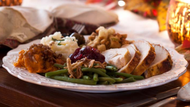
Oven-ready turkey, from prep to the table
Posted by Copas Farm Shop on 23rd Sep 2026
A pre-prepared, oven-ready turkey arrives ready to go straight into the roasting tin, no gutting, no plucking, no complicated butchery required. The key steps between arrival and carving are: rest the bird at room temperature for at least an hour, season generously, roast at the right temperature for the right time, and rest again before you serve.
Key takeaways
- An oven-ready turkey arrives fully prepared: cleaned, giblet-free, and trussed — you only need to season it and roast it.
- Bring the turkey out of the fridge at least 1 hour before roasting so the meat cooks evenly rather than staying cold in the centre.
- Roast at 180°C fan (or 200°C conventional) and allow roughly 40 minutes per kg, plus 20 minutes resting time minimum.
- The safest way to check doneness is a meat thermometer: the thickest part of the thigh should reach 75°C internal temperature.
- Dry-aged, slow-grown birds like those from Copas benefit from a light hand with added fat — the natural depth of flavour needs little help.
- Order well in advance of Christmas or any large gathering; free-range turkeys from quality farms sell out most years.
What does "oven-ready" actually mean for a turkey?
An oven-ready turkey is a bird that has been fully processed before it reaches you: plucked, drawn (internal organs removed), cleaned, and usually trussed so it holds its shape during roasting. Some birds also arrive with the neck removed and the cavity wiped clean. What you receive is a whole bird, ready for the oven the moment you've seasoned it.
This is distinct from buying a bird "in feather" or a dressed-but-not-drawn bird, which requires additional butchery at home. Oven-ready is the standard format sold by farm shops and most premium suppliers in the UK.
At Copas, the birds are also dry-aged after plucking — a process that draws out surface moisture and concentrates the flavour of the meat before the turkey even enters your kitchen.
What prep does an oven-ready turkey still need before roasting?
"Oven-ready" does not mean you can take it from the box straight to the oven. Three things matter: temperature, dryness, and seasoning.
Bring the bird to room temperature. Remove the turkey from the fridge at least 1 hour before roasting — ideally closer to 90 minutes for a larger bird over 6 kg. A cold bird straight from the fridge takes far longer to cook through, which means the breast can dry out before the thigh reaches a safe temperature.
Pat the skin dry. Even if the turkey has been dry-aged, there will be some surface moisture from packaging. Pat the skin thoroughly with kitchen paper. Dry skin browns properly; damp skin steams and stays pale.
Season well, inside and out. Rub the skin with softened butter or a good oil (not required with a Copas Farm Shop Turkey), then season generously with flaked sea salt. Grinding salt onto the breast skin in particular helps the fat render and the skin crisp. Season the cavity too, the flavour works its way through the meat as it roasts.
How do you prepare the cavity without stuffing it?
Most food safety guidance in the UK advises against stuffing the main cavity of a large turkey, because the dense mass of stuffing slows heat penetration and makes it difficult to ensure the bird's core temperature is safe. You can, however, still add aromatics to the cavity for flavour.
A halved onion, a few garlic cloves, a lemon cut in half, and a small bunch of fresh thyme or bay leaves all work well. They release steam and flavour as the bird roasts, without adding a mass of cold, raw stuffing that insulates the interior.
If stuffing matters to you, cook it separately in a dish alongside the turkey. It browns better, cooks more evenly, and you can guarantee it reaches the right temperature.
How long does an oven-ready turkey take to cook?
Cooking time depends on weight. The figures below are a practical guide for an unstuffed bird at 180°C fan (200°C conventional), which is the temperature at which most UK oven-ready turkeys are roasted.
| Bird weight | Approximate roasting time | Serves (approx.) |
|---|---|---|
| 3–4 kg | 1 hr 30 min – 1 hr 45 min | 6–8 people |
| 4–5 kg | 1 hr 45 min – 2 hrs | 8–10 people |
| 5–6 kg | 2 hrs – 2 hrs 30 min | 10–12 people |
| 6–7 kg | 2 hrs 30 min – 2 hrs 50 min | 12–15 people |
| 7–8 kg | 2 hrs 50 min – 3 hrs 15 min | 15–18 people |
These times assume the bird started at room temperature, not straight from the fridge. Always verify with a meat thermometer rather than relying on time alone.
How do you know when an oven-ready turkey is properly cooked?
The only reliable test is a meat thermometer. Insert the probe into the thickest part of the thigh, avoiding the bone, the bone conducts heat and gives a false reading. You're looking for 75°C internal temperature.
If you don't have a thermometer, pierce the thigh at its thickest point with a skewer. The juices should run completely clear with no trace of pink. This is a less precise method, and a thermometer is genuinely worth owning if you are cooking a large bird for a table full of people.
Check both thighs if the bird is over 5 kg. Oven hotspots mean one side can be further ahead than the other.
Should you cover an oven-ready turkey with foil while it roasts?
Start covered, finish uncovered. Covering the breast with foil for the first two-thirds of the cooking time prevents the white meat from drying out before the darker thigh meat has had time to cook through. Remove the foil for the final 30–40 minutes to allow the skin to colour and crisp.
If you want a deeply bronzed skin, remove the foil and increase the temperature by 10–15°C for the final 20 minutes. Watch it closely — buttered skin can take on colour quickly at higher heat.
Basting every 30–40 minutes with the pan juices also helps maintain moisture in the breast and adds colour. It's an extra step, but it makes a meaningful difference to the finished bird.
How long should you rest an oven-ready turkey before carving?
Rest the bird for at least 30 minutes before carving — 45 minutes is better for any bird over 5 kg. A longer rest does not cool the bird significantly; the meat retains heat well. What it does is allow the muscle fibres to relax and the juices to redistribute through the meat rather than running out the moment you cut.
Tent the rested bird loosely with foil and a clean tea towel to hold the warmth. Do not seal it tightly or the steam will soften the skin you have worked to crisp.
Use this window to finish your roast potatoes, make the gravy from the pan juices, and bring your sides together. The bird will hold at a good serving temperature for well over an hour.
What are the most common mistakes with oven-ready turkey?
Roasting it straight from the fridge. This is the single most frequent cause of uneven cooking. The breast overcooks before the thigh is safe.
Relying solely on time rather than temperature. Ovens vary, birds vary in density, and the difference between a bird that rested at room temperature and one that did not can add 30 minutes to your roasting time. A thermometer removes the guesswork.
Under-seasoning. Turkey is a large piece of meat. It needs more salt than feels comfortable on a smaller cut. Season before roasting and again after resting.
Cutting too soon. Slicing a turkey before it has rested is the fastest way to a dry plate. The rest is not optional.
Choosing on price rather than provenance. A lower-welfare bird with more water content will shrink significantly in the oven and give you less usable meat per kilogram. The effective cost difference between a well-raised bird and a cheap supermarket alternative is smaller than the price gap suggests.
How does the quality of the turkey affect what you taste?
With a well-raised, slow-grown bird, the flavour is in the meat itself, not just in the seasoning you add. A Copas turkey, for example, is slow-grown on open pasture, hand-plucked, and dry-aged, which produces a firmer, more flavourful bird than one raised quickly indoors. Notably, the dry-ageing process specifically removes surface moisture and concentrates flavour in a way that translates directly to how the finished meat tastes — and in our experience, that difference is most apparent when the bird is cooked simply, without heavy seasoning or excessive added fat.
With a supermarket oven-ready turkey, more of the eating quality comes from what you add — butter, herbs, basting — because the base flavour of the meat is less developed. Neither approach is wrong, but it helps to understand that the prep steps above will show up more clearly with a well-sourced bird.
How should you store an oven-ready turkey before cooking it?
Keep the turkey in its original packaging in the coldest part of the fridge — typically the bottom shelf — until you are ready to take it out for room-temperature resting. Fresh oven-ready turkeys from a farm shop will typically carry a use-by date; follow it, and do not refreeze a bird that was delivered fresh.
Store the turkey on a tray or plate to contain any drips and prevent cross-contamination with other food in the fridge.
Frequently Asked Questions
Does an oven-ready turkey need to be washed before cooking? No. Washing raw turkey spreads bacteria around the sink and onto surfaces without making the meat any safer. The heat of the oven eliminates bacteria. Pat the bird dry with kitchen paper instead — this improves browning and is all the preparation the skin needs.
Can I cook an oven-ready turkey from frozen? You can, but it requires a significant additional cooking time and very careful temperature management. For a fresh oven-ready bird, this does not apply. If you have a frozen bird, the safest approach is to defrost it fully in the fridge — allow 24 hours per 2 kg — before cooking it using the timings above.
What temperature should an oven-ready turkey be when it goes into the oven? Room temperature — meaning it has been out of the fridge for at least 1 hour and ideally 90 minutes for a larger bird. It does not need to be warm, just not fridge-cold. This ensures even cooking throughout and reduces total roasting time.
Is it worth buying a pre-basted oven-ready turkey? Pre-basted birds have butter or oil injected under the skin before sale. They can be convenient, but they give you less control over seasoning and flavour. A dry-aged, naturally flavourful bird needs no pre-basting — buttering the skin yourself before roasting achieves the same effect with more control.
How far in advance can I prep an oven-ready turkey before roasting? You can butter and season the bird the evening before, cover it, and return it to the fridge. This is a useful approach if you want to save time on the day. Take it out at least 1 hour before it goes into the oven. Do not salt the skin more than 12 hours in advance if you are concerned about moisture being drawn out.
Do I need to remove the giblets from an oven-ready turkey? Most oven-ready turkeys come without giblets, but some suppliers include a bag of giblets inside the cavity. Check before seasoning. If giblets are present, remove them — they make excellent stock for gravy.
What should I do with the resting juices from an oven-ready turkey? Pour the resting juices directly into your gravy. They contain concentrated meat flavour and natural gelatin from the bird. Add them to the roasting pan after you have deglazed it with stock or wine, and you'll have a far richer gravy than one made from stock alone.