
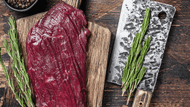
What is Game Meat?
Posted by Copas Farm Shop on 13th Oct 2026
Game in food refers to meat from wild or farmed animals hunted or reared for sport and eating, rather than raised commercially for slaughter. In Britain, the most common game meats are pheasant, partridge, grouse, venison, rabbit, hare, and wild duck. Game is distinct from everyday livestock because the animals typically roam freely, eat a natural diet, and carry a deeper, more mineral flavour than farm-reared equivalents.
Key takeaways
- Game meat in Britain covers a broad category: feathered game (birds) and furred game (deer, rabbit, hare), each with distinct seasons and flavour profiles.
- The British game season officially opens for grouse on 12 August, the "Glorious Twelfth", and runs through to February for most species.
- Venison is the most widely available game meat year-round in the UK, because deer are managed and culled throughout the year to control wild populations.
- Game is naturally high in protein and lower in saturated fat than most farmed red meat, because wild animals move more and carry less body fat.
- Farmed or "released" game birds, particularly pheasant and partridge, bridge the gap between fully wild and conventionally farmed, they are reared in pens before release but are still classified as game.
- Fresh game from a farm shop or online butcher will taste noticeably different from the pre-packed supermarket equivalent, because hanging time and handling have a significant effect on flavour.
What exactly counts as game meat in the UK?
Game meat is any animal taken by hunting or shooting, or specifically reared and released for those purposes. In British food culture, game divides into two clear groups.
Feathered game includes pheasant, partridge, grouse, woodcock, snipe, and wild duck (mallard is the most common). Grouse is fully wild; pheasant and partridge are typically reared in pens and then released onto estates before the season opens.
Furred game includes red, roe, fallow, and sika deer (all sold as venison), plus wild rabbit, brown hare, and wild boar. Deer and rabbit are the most commercially available because supply is relatively consistent. Venison in particular has moved from the restaurant-only category into farm shops and online delivery.
Game that is sold commercially in the UK must be handled by a licensed game dealer and pass food safety checks, so wild-shot game reaching a shop is regulated, not uncontrolled.
How does game meat taste different from farmed meat?
The flavour gap between game and farmed meat is real, and it comes from three factors: diet, exercise, and age at slaughter.
Wild or free-roaming animals eat what they find: grass, heather, berries, seeds, insects. That varied diet works its way into the fat and muscle, creating deeper, more complex flavour. A grouse that has fed on heather moorland tastes of where it lived in a way that a farmed chicken simply cannot.
Because these animals move freely and often extensively, their muscles are worked harder. More worked muscle contains more myoglobin, the protein that carries oxygen in muscle tissue, and more myoglobin means darker, richer meat with a pronounced, slightly mineral character. This is sometimes described as "gamey," a word that puts some people off but simply means flavour with depth.
Hanging, suspending the bird or carcass in a cool, airy environment for several days after shooting — develops that character further. A well-hung pheasant has a noticeably different flavour from one cooked on the same day it was shot. How long you hang game is a matter of taste: two to five days is a reasonable range for most birds.
What is the British game season, and when is each species available?
Game seasons in the UK are set by law to protect breeding populations. The calendar below covers the main species.
| Species | Season opens | Season closes | Notes |
|---|---|---|---|
| Grouse (red) | 12 August | 10 December | Fully wild; most expensive and prized |
| Partridge | 1 September | 1 February | Often farmed and released |
| Pheasant | 1 October | 1 February | Most widely available game bird |
| Woodcock | 1 October | 31 January | Scarce; considered a delicacy |
| Wild duck (mallard) | 1 September | 31 January | Inland; different dates coastal |
| Hare | No closed season (Scotland has August–September closed) | — | Best October–February |
| Rabbit | No closed season | — | Available year-round |
| Venison | Year-round (stags and hinds have separate seasons) | — | Farmed venison available all year |
Venison stands apart because deer management is a year-round activity. Red deer stags are in season August to April; hinds (female deer) October to February. Farmed venison has no closed season and is available whenever a supplier stocks it.
Wild venison from a well-managed estate will taste richer and more complex than farmed venison, which eats a more controlled diet. Both are worth eating; the choice comes down to how pronounced you want the flavour.
How should you cook game meat to get the best results?
Game meat is lean, which means it can dry out faster than fattier farmed meats. That leanness is what makes it lower in saturated fat, but it also demands a slightly different approach in the kitchen.
For game birds (pheasant, partridge, grouse):
- Bring the bird to room temperature before cooking, at least 30 minutes out of the fridge.
- Protect the breast with bacon rashers or butter basting during roasting; the breast dries out faster than the legs.
- Roast at a high heat (200–220°C) for a shorter time than you might expect: a pheasant takes around 45–55 minutes, not the 90-plus minutes of a chicken.
- Rest the bird for at least 15 minutes before carving, this redistributes juices and makes a significant difference to texture.
- Serve slightly pink at the bone; unlike chicken, game birds are considered safe and more flavourful at this point.
For venison:
- Take the meat out of the fridge 30–45 minutes before cooking.
- For loin or haunch steaks, cook quickly over high heat to medium-rare (around 57°C internal temperature) — venison tightens and dries if taken to well done.
- For shoulder or leg, low and slow is correct: braise at 160°C for 3–4 hours until the meat pulls apart.
- Acid (red wine, juniper, redcurrant) balances venison's mineral richness; use it in the sauce or marinade.
- Rest steaks for 5 minutes; joints for at least 20.
Why is game meat worth considering?
Importantly, game is arguably the most traceable meat on the British market. A wild deer or pheasant has eaten a natural diet in a specific landscape, there is no supply chain of compound feed, no confinement, no routine medication.
From a sustainability standpoint, deer in the UK require active management because they have no natural predators. Eating venison directly supports that management by creating a market for animals that would otherwise be culled and wasted. Rabbit, similarly, is a significant agricultural pest; eating it is one of the more defensible food choices available in Britain.
The flavour argument is straightforward: game eaten in season, well hung and properly cooked, is among the most complex and satisfying meat Britain produces. It sits alongside free-range lamb and dry-aged beef as a category where quality of life and quality on the plate are genuinely connected.
Frequently Asked Questions
What does "gamey" actually mean when describing meat? "Gamey" describes a pronounced, slightly mineral, earthy flavour found in wild or free-roaming animals. It comes from a varied diet, worked muscle, and the natural ageing process. The intensity varies by species, grouse is strongly gamey, farmed pheasant mildly so, venison falls somewhere in between depending on how it has been hung.
What is the mildest game meat to try first? Pheasant is the most accessible starting point — its flavour is only slightly stronger than chicken, the preparation is familiar, and it is widely available during the October-to-February season. Venison loin is similarly approachable when cooked to medium-rare, with a flavour closer to beef than to the more intense game birds.
Does game meat need to be hung, and for how long? Hanging improves flavour and texture in game birds by allowing enzymes to break down muscle fibres, the same principle as dry-ageing beef. Two to five days is the common range for most birds at a cool, consistent temperature (around 4°C). Venison is typically hung for longer, up to two weeks for a whole carcass, depending on the supplier's preference. Pre-prepared game from a butcher will have been hung already.
Is venison classed as game in the UK? Yes. Venison — meat from any species of deer — is classified as game in the UK. Wild venison from a managed estate is the purest form; farmed venison, raised in open parkland conditions, is also available year-round and broadly considered premium meat, though it lacks the fully wild pedigree.
Is game meat better for you than farmed meat? Game meat is typically leaner than farmed red meat, higher in protein relative to fat, and free from the routine medication sometimes associated with intensive livestock farming. It is not a health food in the clinical sense, but as part of a balanced diet it compares favourably with many farmed alternatives on nutritional grounds.
What is the difference between game and free-range meat? Free-range refers to a farming standard, animals have access to outdoor space but are still managed on a farm from birth to slaughter. Game refers to wild or wild-release animals taken by hunting. A free-range chicken has a better life than a caged one, but it still lives and eats within a managed system. A wild pheasant or roe deer lives entirely outside that system until it is shot.