
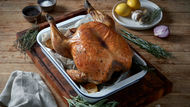
Your complete guide to buying free-range turkey and chicken from a farm shop
Posted by By Copas Farm Shop on 22nd Jul 2026
Buying free-range turkey and chicken from a farm shop means choosing birds raised on open pasture, grown slowly for deeper flavour, and sold with full traceability from field to table — a meaningfully different product from supermarket poultry in both welfare standards and eating quality.
Key takeaways
- Slow-grown free-range birds typically take 12–26 weeks to reach table weight, compared to 5–6 weeks for standard commercial birds; that extra time builds fat marbling and flavour depth.
- At Copas Farm Shop, free-range turkeys are dry-aged after hand-plucking — a process that draws out surface moisture and concentrates flavour before the bird reaches your door.
- Whole free-range chickens from a farm shop typically cost between £18 and £30 depending on size and breed; whole free-range turkeys range from £60 to £150 or more for larger birds.
- Order early, particularly for Christmas turkeys, as supply is in demand and most farms sell out well before December.
What does "free-range" actually mean for turkey and chicken in the UK?
In the UK, "free-range" has a legal definition under EU-retained food labelling regulations. Poultry must have continuous daytime access to open-air runs, predominantly covered with vegetation, with a maximum indoor stocking density of 27.5 kg per square metre for chickens and 25 kg per square metre for turkeys.
What the label does not guarantee is how much time a bird actually spends outdoors, the quality of the pasture, or how slowly it was grown. Two farms can both carry the free-range label while operating very differently. A farm shop with direct traceability — where you can ask exactly how the birds were raised — removes that ambiguity.
Free-range vs. organic vs. pasture-raised chicken and turkey: which should you choose?
| Option | Best for | Approximate cost (whole bird) | Honest limitation |
|---|---|---|---|
| Free-range | Welfare improvement over standard, accessible price point | £18–£30 (chicken), £60–£120 (turkey) | Outdoor time not always guaranteed in practice |
| Organic | Assured outdoor access, certified feed without synthetic inputs | £25–£45 (chicken), £80–£150 (turkey) | Higher price; flavour not always superior to well-raised free-range |
| Pasture-raised / high-welfare farm | Maximum outdoor access, slow growth, full traceability | £28–£50 (chicken), £90–£150+ (turkey) | Limited availability; usually order-ahead only |
| Standard supermarket | Budget, convenience | £5–£14 (chicken), £30–£60 (turkey) | Faster-grown, lower welfare, less flavour depth |
For most households, a pasture-raised free-range bird from a farm shop you can speak to directly sits at the sweet spot — better welfare than certified organic in practice, and with a flavour profile that justifies the price.
Why does slow-grown free-range poultry taste different?
Slow growth allows fat to develop differently. A commercial broiler chicken reaches slaughter weight in around 35 days; a well-raised free-range bird takes 12–16 weeks. That extended growing period allows intramuscular fat — the kind responsible for flavour and juiciness — to build in a way that simply doesn't happen in a fast-grown bird.
Foraging on pasture also changes the fat composition. Birds that eat grass, insects, and varied plant matter produce fat with a higher proportion of omega-3 fatty acids and a more complex flavour profile than grain-fed indoor birds.
Dry-ageing adds another layer. When moisture is drawn from the surface of a carcass under controlled conditions, the remaining flavour compounds concentrate. At Copas, birds are hand-plucked and dry-aged before dispatch — a step that supermarket supply chains can't accommodate at scale.
How to buy free-range turkey from a farm shop: step by step
- Decide on size early. Allow roughly 500g of dressed bird weight per person for turkey, accounting for bones. A family of eight typically needs a 4–5 kg bird; a table of twelve may need 6–7 kg.
- Place your order well in advance. Farm shops raising birds to welfare-led standards produce finite numbers each year. For Christmas, order by October at the latest — many farms, including Copas, close their order books before December.
- Confirm the breed and rearing method. Ask whether the birds are a heritage breed or a commercial hybrid, how long they were grown, and whether they are pasture-raised. Good farm shops will answer these questions without hesitation.
- Check the fulfilment method. Understand whether the bird will arrive fresh-chilled or frozen, how it is packaged, and what the delivery window is. A fresh-chilled bird should arrive in a temperature-controlled box and be cooked within 3–5 days of delivery.
- Clarify what oven-ready means. Most farm shop birds arrive plucked, drawn, and with giblets included separately. Confirm this before ordering if you want giblets for stock or gravy.
- Store correctly on arrival. Remove packaging, place the bird on a rack in the coldest part of your fridge (below 4°C), and allow air circulation. Do not rinse it — pat dry if needed.
- Bring to room temperature before cooking. Remove from the fridge 1–2 hours before roasting. This matters more with a large, dense bird — cold from centre to surface adds significant uneven cooking time.
How to buy free-range chicken from a farm shop: what to look for
Free-range farm chicken is available year-round, unlike turkey, which means you have more time to compare sources before committing. Start by looking for whole birds rather than portions — whole birds give you the backbone and carcass for stock, which is where a large proportion of the flavour value sits.
Look for skin that is cream to pale yellow in colour, not bright white. A yellowish tint indicates a bird that has been foraging on pasture; it reflects the carotenoids in the grass. The skin should be dry, not wet or slimy, particularly if it has been dry-aged.
Ask about the breed. A Poulet de Bresse-style or slower-growing heritage breed will cost more than a commercial free-range hybrid, but the eating difference is considerable — firmer leg meat, more flavour in the breast, and a carcass that produces genuinely gelatinous stock.
Across the range at Copas Farm Shop, free-range turkeys are raised on the same pasture-welfare principles as the chickens — slow-grown, hand-plucked, and dry-aged before despatch.
What questions should you ask a farm shop before buying?
A farm shop with strong welfare standards and genuine traceability will welcome direct questions. The following are worth asking before any order.
How long were the birds grown? Any answer under 10 weeks for chicken or under 20 weeks for turkey suggests a fast-growing hybrid rather than a genuinely slow-grown bird.
What is the stocking density? The UK free-range minimum is 2,500 birds per hectare for chickens outdoors. Farms operating at lower densities — 1,000–1,500 birds per hectare — are offering meaningfully better conditions.
Are the birds dry-aged? Dry-ageing is rare in mass production because it requires time, space, and controlled temperature. A farm that dry-ages is absorbing real cost on your behalf.
Where is the farm? A farm shop selling birds reared on-site, or within a named radius, offers a level of traceability a distributor-fed shop can't match. In our experience at Copas, customers who know where the birds were raised tend to handle and cook them with noticeably more care — and report better results.
What happens to the giblets? Farms that include giblets with whole birds are not cutting the carcass for extra margin. It's a small signal of a more generous, whole-product approach to the bird.
How much does free-range turkey and chicken cost from a farm shop in 2026?
Free-range chicken from a farm shop typically costs between £18 and £35 for a whole bird, depending on size, breed, and whether it has been dry-aged. Portions — crown, thighs, legs — range from £8 to £20 per pack. Expect to pay a premium of roughly 40–60% over a standard supermarket free-range bird.
Free-range turkey from a specialist farm shop ranges from around £65 for a smaller bird (3–4 kg) to upwards of £140–£160 for a large, dry-aged bird of 7 kg or more. Heritage-breed turkeys, where available, sit at the upper end of that range.
The price difference reflects real cost: longer growing periods, lower stocking densities, hand processing, and dry-ageing all add up before the bird reaches you. Farms that sell at supermarket prices on these welfare standards are not making money — and that's worth holding in mind when comparing.
If turkey is outside your budget this year, it's worth exploring the full range of farm meats available from quality farm shops — including beef, lamb, and seasonal cuts that carry the same rearing philosophy.
What are the most common mistakes when ordering free-range poultry from a farm shop?
Ordering too late. Farm-shop birds are produced in finite numbers each year. Farms growing birds at the welfare standards described above can't simply increase a flock at short notice. For Christmas turkeys especially, orders placed in November frequently miss out. Most farms close order books 6–8 weeks before Christmas.
Confusing fresh and frozen. A chilled fresh bird and a frozen bird behave differently in storage and cooking. A fresh bird must be cooked within the window stated on delivery; it can't be refrozen once received without texture loss.
Ignoring the giblets. Turkey giblets — neck, heart, liver, gizzard — are the foundation of proper gravy and stock. Many first-time farm shop buyers discard them without realising what they are.
Under-resting the bird. A large free-range turkey needs a minimum of 30–45 minutes resting after it leaves the oven. A denser, slower-grown bird holds heat longer than a supermarket bird, and cutting into it too early loses the juices that have been drawn to the surface.
Not using the carcass. A slow-grown, pasture-raised carcass — once the meat is carved — will produce stock of a depth a supermarket bird simply cannot match. Cover with cold water, add aromatics, and simmer for 3–4 hours.
Frequently Asked Questions
What is the difference between free-range and organic turkey or chicken? Free-range means the birds have legal access to outdoor pasture; organic additionally requires certified organic feed, no routine antibiotics, and stricter outdoor access requirements. In practice, a well-run free-range farm may offer better welfare than a certified organic operation — the key is to ask directly about the stocking density and time spent outdoors rather than rely solely on the label.
When should I order a free-range Christmas turkey from a farm shop? Order by October for a Christmas delivery. Most specialist farm shops, including Copas, produce a fixed number of birds each year and sell out before December. Leaving it until late November carries a real risk of the size or breed you want being unavailable.
How do I know if a free-range chicken from a farm shop is genuinely high-welfare? Look for cream or pale yellow skin, ask about growing period (12 weeks or more for genuine slow growth), confirm outdoor stocking density, and check whether the bird has been dry-aged. Any farm confident in its standards will answer these questions clearly. Certifications such as RSPCA Assured and Pasture for Life provide third-party verification.
Can I order free-range turkey and chicken online from a farm shop? Yes. Specialist farm shops like Copas operate online ordering with temperature-controlled delivery for fresh-chilled birds. Orders are typically fulfilled within a specified delivery window, and fresh birds should be refrigerated immediately on arrival and cooked within 3–5 days.
How much free-range turkey do I need per person? Allow approximately 500g of dressed bird weight per person. For a table of eight, a 4–5 kg bird is sufficient; for twelve guests, plan for 6–7 kg. If you want significant leftovers, add an extra kilogram. A free-range turkey sourced from a farm shop will typically weigh more precisely to the stated size than supermarket birds, which are often graded to broader weight bands.
What is dry-ageing and why does it matter for poultry? Dry-ageing involves holding a plucked, oven-ready bird in a controlled chilled environment — typically 1–4°C with good airflow — for several days after processing. Surface moisture evaporates, which concentrates flavour and produces a drier skin that crisps more readily during roasting. It's a time-intensive step that most commercial processors skip entirely.
Is free-range chicken from a farm shop suitable for everyday cooking? Entirely. A whole free-range chicken roasts in 1 hour 20 minutes to 1 hour 40 minutes depending on size, and the carcass makes excellent stock. The higher upfront cost is partly offset by the additional meals a good stock provides — soups, risottos, sauces — which a supermarket carcass rarely delivers at the same depth.
What other meats can I buy from a quality farm shop alongside poultry? Most well-stocked farm shops carry beef, lamb, and seasonal game alongside their poultry range. At Copas, the same high-welfare, pasture-raised approach applied to the turkey and chicken range extends across the full range of farm meats — worth exploring if you're building a seasonal or occasion order around the centrepiece bird.