
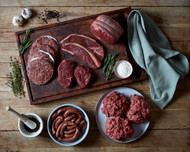
A Complete Guide to Buying Premium Beef and Chicken from a Farm Shop
Posted by Copas Farm Shop on 29th Jul 2026
Buying premium beef and chicken from a farm shop means choosing meat that is pasture-raised, properly aged, and traceable to a specific farm — qualities that directly affect flavour, texture, and welfare standards. At Copas Farm Shop, cattle are heritage-breed and pasture-grazed, while chickens are slow-grown and free to roam, with every cut dry-aged for depth of flavour before it reaches your table.
Key takeaways
- Premium farm shop beef is typically dry-aged for a minimum of 21 days; Copas dry-ages its heritage-breed beef for at least 28 days for fuller flavour.
- Free-range chicken from a farm shop is slow-grown, meaning birds reach maturity over a longer period than commercial equivalents — usually 70–80 days versus 35 days in mass production.
- When buying beef, look for marbling, a deep burgundy colour, and a firm, dry surface — signs of proper ageing and good pasture feeding.
- Farm shop chicken should have a natural pale-golden skin, a plump breast, and no excess moisture in the packaging.
- Traceability matters: a good farm shop can name the breed, the field, and the feed — ask if it isn't displayed.
- Ordering online from a farm shop such as Copas Farm Shop gives you access to cuts that supermarkets rarely stock, including dry-aged fore rib, flat iron, and whole birds in a range of sizes.
What makes farm shop beef different from supermarket beef?
Farm shop beef comes from identified breeds, raised on pasture, and aged in controlled conditions after slaughter. Supermarket beef is often from unnamed commercial breeds, wet-aged in vacuum packs for as little as 7 days, and selected for yield rather than flavour.
The breed matters significantly. Heritage breeds such as Hereford, Longhorn, and Dexter carry more intramuscular fat, which is what creates the marbling that bastes the meat from within as it cooks. Commercially farmed beef prioritises lean muscle growth, which produces a paler, firmer cut with less flavour complexity.
Dry-ageing is the other defining difference. During dry-ageing, moisture evaporates from the surface, enzymes break down muscle fibre, and the flavour concentrates. A minimum of 21 days is the standard; 28 days and beyond produces a noticeably richer, nuttier flavour. At Copas Farm Shop, heritage-breed cattle are pasture-grazed in cherry orchards and dry-aged for at least 28 days.
What makes farm shop chicken worth buying?
Premium farm shop chicken comes from slow-grown breeds raised in low-density flocks with genuine outdoor access — factors that produce firmer, more flavourful meat with a natural fat layer under the skin.
The key difference is growth rate. Commercial broiler chickens reach slaughter weight in around 35 days. Slow-grown free-range birds take 70–80 days, which allows the muscle tissue to develop properly. The result is a bird with a defined leg-to-breast ratio, good skin integrity, and a flavour that holds up to roasting, braising, or grilling without becoming watery.
Look for birds with pale golden skin, a plump but not swollen breast, and packaging with minimal pooled liquid. Excess moisture in the tray is a reliable sign of fast growth and wet-processing. A farm shop bird should arrive firm and dry.
How do you identify quality beef at a farm shop?
Good beef is identified by colour, marbling, surface texture, and smell. A well-aged cut should be deep burgundy to dark red — not bright cherry red, which signals the meat has only recently been cut or is not aged. Bright red beef has been exposed to oxygen for a short time and has not undergone the ageing process.
Marbling — the fine white fat running through the muscle — should be visible across the cut, not confined to the edges. Edge fat is trim fat; intramuscular fat is flavour fat. On a well-marbled ribeye or sirloin, you should see a web of fine white lines through the lean.
The surface should feel dry and slightly firm to the touch. Wet-aged beef from a vacuum pack will feel slick; dry-aged beef has a slightly tacky, dry crust on the outer layer. A faint, clean, slightly nutty smell is normal and desirable. Any sharp, ammonia, or sour note is a sign of a problem.
How do you identify quality chicken at a farm shop?
Quality farm shop chicken has a pale golden skin with no grey patches, a breast that sits high and firm, and legs that feel dense rather than soft. The cavity should smell clean and mild.
Skin colour is a useful indicator. Slow-grown, free-range birds that have had access to grass develop a slight golden tint to the skin from the carotenoids in their diet. Pale, white, almost translucent skin usually indicates a fast-grown bird kept indoors on grain alone.
Check the packaging for resting liquid. A small amount of natural juice is normal; a visible pool of pale pink liquid is a sign of excess retained water from rapid processing. Farm shop birds, properly rested and chilled rather than water-chilled, arrive noticeably drier.
Which beef cuts should you buy from a farm shop?
The cuts that benefit most from farm shop quality are those where flavour and texture are the whole point — not cuts that are tenderised by brining or sauce. Rib-eye, sirloin, flat iron, and short rib are all cuts where dry-ageing and breed quality are directly detectable in the eating.
| Cut | Best for | Typical farm shop price (2026) | Notes |
|---|---|---|---|
| Rib-eye steak | Pan-searing, grilling | £22–£30 per steak | High marbling; benefits most from dry-ageing |
| Sirloin steak | Grilling, weeknight cooking | £18–£25 per steak | Leaner than rib-eye; clean, firm flavour |
| Flat iron | Slow cook or hot grill | £10–£15 per piece | Excellent value cut; under-used |
| Fore rib (bone-in) | Sunday roast | £45–£70 per joint | Best roasting cut; rarely at supermarkets |
| Short rib | Braising, long cook | £12–£18 per portion | Rich, collagen-heavy; suits 4–6 hour braise |
| Mince and burgers | Everyday cooking | £8–£12 per 500g | Look for 80/20 lean-to-fat ratio |
For a special occasion, the bone-in fore rib is the cut that most clearly demonstrates what pasture-rearing and dry-ageing actually produce. It's the cut that answers the question Copas asks of every product: "Is this good enough for our own family table?"
Which chicken cuts should you buy from a farm shop?
Whole birds offer the best value and flavour from a farm shop, because you are paying for one slow-grown animal rather than individual portion cuts. A whole free-range chicken from a farm shop typically weighs 1.6–2.2kg and serves 3–4 people comfortably.
| Cut | Best for | Typical farm shop price (2026) | Notes |
|---|---|---|---|
| Whole bird | Roasting, spatchcocking | £16–£26 | Best overall value; bones for stock |
| Crown | Smaller roast, even cooking | £14–£20 | No legs; easier to carve |
| Legs and thighs | Braises, grills, tray bakes | £8–£14 per pack | More forgiving to cook; deep flavour |
| Breast fillets | Quick weeknight cooking | £10–£16 per pack | Lean; do not overcook |
Chicken legs and thighs from a slow-grown bird are particularly worth seeking out. The dark meat carries more flavour than the breast, copes well with longer cooking times, and is significantly less expensive per portion.
How to order premium beef and chicken from an online farm shop: step by step
-
Check the breed and rearing method. A farm shop worth buying from will state the breed, the rearing conditions (pasture-raised, free-range, free-to-roam), and the ageing period. If this information isn't displayed, ask.
-
Choose your cut based on how you plan to cook it. Steaks suit high heat and short cooking. Joints and ribs suit longer, lower heat. Legs and thighs suit braises. Match the cut to the method before you order.
-
Check delivery lead times. Premium farm shop meat is often cut to order or dispatched fresh on specific days. Copas, for example, dispatches on a set schedule to ensure the meat arrives in peak condition. Build in 2–3 days of lead time, especially for larger joints.
-
Plan for proper storage on arrival. Fresh meat should go straight into the fridge at 0–4°C. If you are not cooking within 2 days, freeze immediately. Do not refreeze meat that has already been thawed.
-
Rest the meat before cooking. Remove beef from the fridge 30–45 minutes before cooking, and chicken 20–30 minutes before. Meat cooked from cold seizes at the surface before the centre comes to temperature, which is the primary cause of uneven cooking.
-
Use a meat thermometer. Chicken is safe and at its best at an internal temperature of 74°C at the thickest part of the thigh. Beef medium-rare is 55–57°C; medium is 60–63°C.
-
Rest after cooking. Beef steaks need 5 minutes; a whole chicken needs 15–20 minutes, loosely tented. Resting allows the internal juices to redistribute rather than run out when the meat is cut.
How does farm shop beef and chicken compare to supermarket options?
Farm shop and supermarket meat serve different purposes. The table below sets out the honest differences.
| Factor | Farm shop | Supermarket |
|---|---|---|
| Breed traceability | Named breed, single farm | Usually unspecified |
| Ageing method | Dry-aged 21–28+ days | Wet-aged 7–14 days |
| Welfare standard | Free-range, pasture-raised | Variable; minimum legal standard common |
| Price (whole chicken) | £16–£26 | £5–£12 |
| Price (rib-eye steak) | £22–£30 | £10–£18 |
| Cut availability | Full range including rare cuts | Limited to high-turnover cuts |
| Packaging | Minimal; often butcher-wrapped | Modified atmosphere or vacuum pack |
The price difference is real. A farm shop whole chicken costs roughly twice what a standard supermarket bird costs. The difference in flavour, texture, and animal welfare is also real — whether that trade-off is worth it depends on how often you are cooking and for what occasion. For everyday weeknight cooking, a good farm shop thigh or leg portion can bridge the gap without the cost of a premium whole bird.
What else can you buy from a premium farm shop alongside beef and chicken?
Most premium farm shops that stock quality beef and chicken also carry a wider range of farm meats — including lamb, venison, and seasonal specials. These cuts follow the same rearing and ageing principles and are worth exploring if you are already placing an order.
In practice, a farm shop that sells one product well is usually a reliable source for the rest of its range. The same attention to breed, welfare, and ageing that produces good beef tends to carry through to other meats. Copas Farm Shop, for instance, raises and sells free-range chicken, heritage beef, and free-range turkeys under the same four-generation family farm approach — slow-grown, pasture-raised, from their fields to your table.
Pantry items — stocks, sauces, marinades — are also worth picking up alongside your meat order, particularly if the farm shop produces them from their own animals. A beef stock made from the same breed you are roasting is a noticeable step up from a commercial alternative.
Frequently Asked Questions
How long does dry-aged beef last in the fridge once delivered? Dry-aged beef delivered fresh will keep safely in the fridge at 0–4°C for 3–5 days from delivery. If you can't cook it within that window, freeze it immediately on arrival. Once thawed, cook within 24 hours and do not refreeze.
Is free-range chicken the same as organic chicken? No. Free-range means the bird had outdoor access and was not kept in a cage or high-density indoor system. Organic means the bird was raised on certified organic feed with no routine antibiotics, and had outdoor access. All organic chicken is free-range, but not all free-range chicken is organic. Both are significantly better welfare standards than standard commercial rearing.
What does dry-ageing actually do to beef? Dry-ageing involves hanging or resting beef in a controlled, cool, low-humidity environment for 21 days or more. During this time, natural enzymes break down the muscle fibres — making the meat more tender — and moisture evaporates, concentrating the flavour. The result is a more complex, nuttier flavour than wet-aged beef, and a noticeably more tender texture.
Why is farm shop chicken more expensive than supermarket chicken? Farm shop chicken costs more because it takes longer to raise. A slow-grown free-range bird takes 70–80 days to reach slaughter weight; a commercial broiler takes around 35 days. More days mean more feed, more land, and more labour. The bird is also processed in smaller volumes, which adds further cost per unit.
How should I store farm shop beef and chicken when it arrives? Place meat directly into the fridge at 0–4°C as soon as it arrives. Keep raw meat on the bottom shelf, below cooked food and vegetables. Use within 2–3 days for chicken; 3–5 days for dry-aged beef. If cooking later, freeze on the day of arrival and thaw slowly in the fridge overnight before use.
What is the best cut of beef for a Sunday roast from a farm shop? The bone-in fore rib, also called standing rib roast, is the best roasting cut for a special occasion. It carries excellent marbling, the bone conducts heat evenly, and the dry-ageing flavour is most pronounced on larger cuts cooked low and slow. A 2kg fore rib serves 4–6 people and takes approximately 1 hour 20 minutes at 180°C for medium-rare.
Can I order farm shop beef and chicken online for home delivery? Yes. Most premium farm shops, including Copas Farm Shop, operate an online shop with home delivery. Orders are typically dispatched on set days each week to ensure freshness, arriving in insulated packaging. Check the delivery lead times before ordering, particularly for larger joints or whole birds that may be cut or prepared to order.