
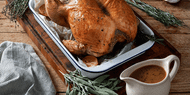
How Do I Make a Delicious Gravy from the Drippings of a Turkey Breast Roast?
Posted by Copas Farm Shop on 16th Nov 2026
Pour the drippings from your turkey breast roasting tin into a jug, skim off most of the fat, then whisk plain flour into the remaining juices over a medium heat to form a paste. Add warm stock gradually, simmer until glossy and season to taste. The process takes roughly fifteen minutes and produces a gravy with genuine depth.
Key takeaways
- Turkey breast drippings alone may be less abundant than those from a whole bird; supplementing with good-quality giblet or chicken stock is the most reliable way to build a rich, full-flavoured gravy.
- A fat-to-flour ratio of one tablespoon each creates a stable roux that prevents lumps; whisking constantly during the first two minutes is what matters most.
- Resting your turkey breast for at least twenty minutes before carving releases additional juices back into the tin, giving you more drippings to work with.
- A splash of dry white wine or a small spoonful of Dijon mustard added after the roux deepens the flavour without masking the character of the bird.
- Straining the finished gravy through a fine sieve takes thirty seconds and makes a noticeable difference to the texture.
Why do turkey breast drippings make such a good base?
The drippings left in the roasting tin after a turkey breast has rested are a concentrated mixture of rendered fat, meat juices and any aromatics you used during cooking. That concentration is what gives a homemade gravy its body and savouriness, qualities a stock cube alone can't replicate. The browned, sticky residue on the bottom and sides of the tin, known as fond, holds the most flavour; it dissolves when you add liquid and forms the backbone of everything that follows. If you've seasoned your bird well, with herbs, butter and aromatics as described in our guide to the best seasonings and marinades for turkey breast, those flavours carry through directly into the gravy.
How do you make gravy from turkey breast drippings, step by step?
This method produces enough gravy for four to six people. Have warm stock ready before you begin, as adding cold liquid to a hot roux can cause it to seize.
- Remove the turkey breast from the tin and set it aside to rest, loosely covered.
- Pour all the tin contents into a heatproof jug and leave for two minutes so the fat rises to the surface.
- Skim off all but one to two tablespoons of fat, then pour the remaining drippings back into the roasting tin.
- Place the tin over a medium hob heat. Add one tablespoon of plain flour and whisk it into the drippings for two minutes until the mixture turns pale golden and smells biscuity.
- Add a small glass of dry white wine and whisk briskly, scraping up the fond from the base of the tin.
- Pour in approximately 400 to 500 ml of warm turkey, chicken or giblet stock in a steady stream, whisking continuously.
- Simmer for eight to ten minutes, stirring frequently, until the gravy coats the back of a spoon.
- Taste, season with salt and white pepper, then strain through a fine sieve into a warm jug.
What if the drippings are sparse?
A boneless turkey breast roast produces fewer drippings than a whole bird or a crown, simply because there is less surface area and less fat cover. If you lift the tin after resting and find only a thin layer of juices, there's no need to panic. Add an extra ladleful of warm stock directly to the tin and work up the fond thoroughly, the colour and flavour are in those caramelised residues, not solely in the volume of liquid. A small knob of cold butter whisked in at the very end will add both gloss and richness to a gravy that looks slightly thin.
How does the quality of the bird affect the gravy?
A free-range, slow-grown turkey breast will consistently produce drippings with more colour and depth than an intensively reared bird. This comes down to the development of the meat itself: birds that have had space to move and time to grow accumulate more intramuscular fat and flavour compounds, which render out during roasting and go directly into the tin. Notably, Copas turkey breasts are slow-grown and free to roam, which is why the roasting tin rarely looks pale or watery; those drippings are worth treating with care.
Troubleshooting: lumpy, pale or greasy gravy
| Problem | Most likely cause | Fix |
|---|---|---|
| Lumpy texture | Flour added too quickly or liquid too cold | Strain through a fine sieve; whisk vigorously off the heat |
| Pale colour | Insufficient fond or under-toasted roux | Cook the roux for an extra minute; add a teaspoon of Worcestershire sauce |
| Greasy finish | Too much fat retained in the drippings | Skim the jug again; whisk a small piece of cold butter in at the end to emulsify |
| Weak flavour | Low-quality or insufficient stock | Reduce the gravy for a further five minutes; add a small splash of soy sauce |
In practice, good gravy is a matter of patience and heat control, not complexity. If you'd like to build an occasion around it, our full range of Christmas Trimmings includes accompaniments that sit alongside a well-made gravy without competing with it.
Frequently Asked Questions
Can I make the gravy ahead of time and reheat it? Yes. Make the gravy up to two days in advance, cool it quickly and store it covered in the fridge. Reheat gently in a saucepan over a low heat, adding a splash of stock to restore the consistency if it has thickened overnight.
Should I use the resting juices that run off the turkey breast when carving? Add them directly to the gravy jug. Resting juices are rich in flavour and will deepen both the colour and the savouriness of the finished sauce without diluting it.
Can I make a gravy without flour? You can thicken gravy with cornflour instead. Mix one teaspoon of cornflour with two teaspoons of cold water to form a slurry, then whisk it into the simmering gravy a little at a time until you reach the consistency you want. The result is slightly glossier and less opaque than a flour-based gravy.
What stock works best if I do not have giblets? A good-quality fresh chicken stock is the most reliable substitute. Avoid stock cubes where possible, as the high salt content can make seasoning difficult to control once the gravy begins to reduce.
Can I freeze leftover gravy? Turkey gravy freezes well for up to three months. Pour it into a freezer-safe container once completely cold, leaving a small gap at the top for expansion. Defrost overnight in the fridge and reheat gently, whisking to restore the texture.