
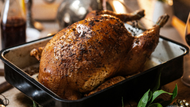
How to Cook Turkey Perfectly Every Time
Posted by Copas Farm Shop on 19th Aug 2026
Professional chefs agree that a perfectly cooked turkey comes down to three things: starting with a quality bird, managing temperature precisely, and resting the meat long enough before carving. Get those three right, and everything else follows.
Key Takeaways
- Rest your turkey for a minimum of 30–45 minutes after removing it from the oven — this is non-negotiable for juicy meat.
- Internal temperature at the thickest part of the thigh should read 75°C before the bird is considered safe and properly cooked.
- Dry-brining with salt 24–48 hours before cooking draws moisture back into the meat and improves skin texture.
- Bring the turkey to room temperature for at least one hour before roasting — a cold bird cooked from the fridge cooks unevenly.
- Basting adds flavour to the skin but does not meaningfully moisten the breast meat; focus on temperature control instead.
What Makes a Turkey Cook Perfectly?
The single biggest variable is the bird itself. A slow-grown, free-range turkey holds more moisture through cooking than a factory-reared bird, because the muscle structure is denser and the fat is distributed more evenly. At Copas Farm Shop, free-range turkeys are slow-grown and dry-aged, which concentrates flavour and gives the skin a better texture before it ever sees an oven.
Beyond the bird, the method you choose — spatchcocking, crown-only roasting, or whole roasting — changes cooking time significantly and is worth deciding before you plan your schedule.
Does Room Temperature Matter?
It matters more than most people think. A turkey taken straight from the fridge into a hot oven will cook unevenly — the breast will overshoot while the thigh is still catching up. Take the bird out at least one hour before roasting, and allow two hours for a large bird over 6kg.
How to Cook a Turkey: Step-by-Step
- Remove from the fridge at least one hour before cooking and allow it to come to room temperature.
- Preheat your oven to 220°C (fan 200°C). Starting hot gives the skin a head start.
- Rub the skin with softened butter or a good dripping. Season with black pepper. Place the bird breast-side up on a rack inside a roasting tray.
- Roast at high heat for the first 30 minutes, then reduce to 180°C (fan 160°C) for the remainder of the cooking time.
- Calculate cooking time as approximately 20 minutes per kg, plus an additional 90 minutes — but always use a thermometer, not timing alone.
- Check the internal temperature by inserting a probe into the thickest part of the thigh, avoiding bone. The reading must reach 75°C.
- Rest the bird loosely tented with foil for at least 30–45 minutes. The internal temperature will continue to rise slightly, and the juices will redistribute.
- Carve only after the full rest period. Rushing this step loses more juice than almost any other mistake.
What Are the Most Common Turkey Cooking Mistakes?
| Mistake | Why It Happens | How to Fix It |
|---|---|---|
| Dry breast meat | Overcooked or cooked from cold | Use a thermometer; rest the bird properly |
| Pale, soft skin | Insufficient surface drying | Dry-brine uncovered in the fridge |
| Uneven cooking | Bird went in cold | Rest at room temperature for 1–2 hours first |
| Undercooked thighs | Relying on timing alone | Always probe to 75°C at the thigh |
| Losing juices when carving | Not resting long enough | Minimum 30–45 minutes under loose foil |
How Long Does a Turkey Take to Cook?
Importantly, cooking time depends on weight and method. As a working guide, allow roughly 20 minutes per kg at 180°C after the initial high-heat phase, but treat this as an estimate only. A 5kg bird will take around two hours at reduced heat; a 7kg bird closer to two and a half. A meat thermometer removes the guesswork entirely and is the one piece of kit worth owning if you don't already.
Spatchcocking — removing the backbone and flattening the bird — reduces overall cooking time by around a third and gives more even results. It's particularly useful if you're short on oven space or time.
Frequently Asked Questions
What temperature should a turkey be when it's fully cooked? The internal temperature at the thickest part of the thigh — not touching the bone — should reach 75°C. At this point, the meat is safe to eat and, if you've managed the process correctly, still juicy.
Should you cover a turkey with foil while it roasts? Foil can slow browning, so it's best used only if the skin is colouring too quickly before the bird is cooked through. Start uncovered, and tent loosely with foil only if needed partway through.
How far in advance can I prepare a turkey? The bird can also be brought to room temperature the morning of cooking, as long as your kitchen is cool. Do not leave it at room temperature for more than two hours if the room is warm.
Does the quality of the turkey really make a difference? Yes — meaningfully so. A slow-grown, well-reared bird has denser muscle, better fat distribution, and a deeper flavour that holds through the heat of the oven. The turkey you start with sets the ceiling for what's possible, regardless of technique.
Can you cook a turkey crown instead of a whole bird? A crown — the breast on the bone with the legs removed — is easier to cook evenly and takes less time. It suits smaller gatherings well. The tradeoff is that you lose the leg meat and the carcass for stock.
How do you stop turkey breast from drying out? Don't rely on basting alone. The most reliable methods are dry-brining in advance to help the meat retain moisture, starting with a good-quality bird, and using a thermometer to pull it from the oven the moment it hits 75°C — not a degree later.