
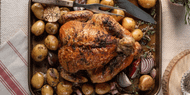
How to Roast Free-Range Chicken So It Stays Moist and Flavourful
Posted by Copas Farm Shop on 26th Oct 2026
Free-range chicken stays moist during roasting when you bring it to room temperature before cooking, season generously under the skin, start at a high heat to set the skin, then lower the temperature to finish gently. Resting the bird for at least 15 minutes before carving is the step most often skipped, and the most consequential.
Key takeaways
- Free-range chicken has less fat than intensively reared birds, so it demands more deliberate moisture management.
- Butter or fat worked directly under the breast skin provides continuous self-basting throughout the roast.
- A meat thermometer reading of 75°C at the thickest part of the thigh is the reliable test for readiness; time alone is not.
- Resting the bird loosely covered with foil for 15 to 20 minutes allows the juices to redistribute before carving.
- The quality of the bird determines the ceiling of the result: a slow-grown, pasture-raised chicken from a farm like our own Thoughtful Producer Free Range Chicken carries deeper flavour before it ever enters the oven.
Why does free-range chicken behave differently in the oven?
Free-range birds spend their lives moving across open pasture, which develops the muscle tissue more fully than in intensively reared poultry. That muscle density is where the flavour lives, but it also means the meat can tighten and dry out more quickly under high or uneven heat. Understanding this is the starting point for every decision that follows.
A mass-produced supermarket chicken experiences little exercise and controlled feed. The meat is too soft and carries more retained water. A slow-grown free-range bird from a farm shop rewards careful technique with genuinely superior flavour; incorrect cooking means there is a risk the lean breast meat will dry before the legs are cooked through.
What are the best ways to cook free-range chicken so it stays moist and flavourful?
The following method applies to a whole free-range chicken of approximately 1.5 to 2 kg, which serves four people comfortably.
Prepare the bird properly before it goes in the oven
Bringing the chicken to room temperature for at least 45 minutes before roasting is not a minor detail. A cold bird placed straight from the fridge into a hot oven cooks unevenly: the outer breast meat overcooks while the thigh joint struggles to reach a safe temperature. Room temperature before cooking is the single easiest correction most home cooks can make.
Pat the skin thoroughly dry with kitchen paper. Moisture on the surface creates steam, which softens the skin rather than crisping it and slows the development of the crust that seals flavour inside the bird.
Season generously, especially under the skin
Work softened butter, or a mix of butter and olive oil, directly under the breast skin with your fingers. This fat melts during cooking and bastes the breast meat continuously from the inside, where it does the most good. Season with sea salt and black pepper both under the skin and across the outside of the bird.
Stuffing the cavity with aromatics, half a lemon, a few sprigs of thyme, a crushed garlic clove, perfumes the meat gently from within without requiring any additional preparation.
Use a two-temperature roasting method
- Preheat the oven to 220°C (200°C fan, gas mark 7).
- Place the chicken breast-side up on a rack in a roasting tin. The rack elevates the bird, so heat circulates underneath, preventing the base from stewing in its own juices.
- Roast at high heat for 20 minutes to set and colour the skin.
- Lower the oven to 180°C (160°C fan, gas mark 4) and continue roasting for a further 40 to 50 minutes, depending on the size of the bird.
- Check the temperature with a meat thermometer inserted into the thickest part of the thigh, avoiding the bone. The reading should reach 75°C.
- Remove from the oven, tent loosely with foil, and rest for a minimum of 15 minutes before carving.
Crucially, the resting period is where moisture is retained, not recovered. Carving immediately after the oven releases the juices onto the board rather than keeping them in the meat.
Does starting the bird breast-side down help?
Roasting breast-side down for the first half of the cooking time is a technique worth considering for free-range birds. The breast meat, which dries fastest, sits in the pool of fat and juices that collect in the tin, effectively self-basting. Flipping the bird breast-side up for the final 20 to 25 minutes allows the skin to colour and crisp. The trade-off is that turning a hot roasting bird is awkward; using a pair of clean kitchen towels rather than tongs prevents the skin from tearing.
How does the quality of the bird affect the result?
In practice, method alone has a ceiling. A slow-grown, pasture-raised chicken carries a depth of flavour in its muscle tissue that a six-week factory bird simply doesn't possess. The fat is better distributed, the skin crisps more cleanly, and the pan drippings produce a richer gravy without any additions.
For those who enjoy exploring a wider range of farm-reared cuts alongside chicken, farm meats selected for the same slow-grown principles follow the same logic: the quality of life the animal had is reflected directly in the quality of the meal.
Frequently Asked Questions
Should you cover a free-range chicken with foil while it roasts? Foil during the roasting itself traps steam and softens the skin, which works against the crisp finish that seals moisture in. Keep the bird uncovered throughout roasting, and apply foil only during the resting period after the oven, when the goal is to hold warmth while the juices redistribute.
How long should a free-range chicken rest before carving? A minimum of 15 minutes is the practical guide for a bird of 1.5 to 2 kg. Larger birds benefit from up to 25 minutes. Resting under a loose foil tent retains enough heat to serve the meat warm while allowing the muscle fibres to relax and reabsorb the juices they expelled during cooking.
Why does free-range chicken sometimes taste dry even when cooked carefully? The most common cause is cooking to time rather than internal temperature. Free-range birds vary in size and density more than factory-reared equivalents, so a fixed timing formula is unreliable. A probe thermometer reading of 75°C in the thigh is the only certain guide. Overcooking by even 10 minutes at high heat will dry a lean free-range breast noticeably.
Can you brine a free-range chicken before roasting? A dry brine, rubbing the bird generously with sea salt and leaving it uncovered in the fridge for 12 to 24 hours, draws moisture to the surface and then reabsorbs it, seasoning the meat throughout and drying the skin for a better crust. A wet brine achieves similar seasoning depth but leaves the skin wetter and harder to crisp. For free-range birds, the dry method suits the goal better.
What is the best way to use the resting juices and pan drippings? The juices that collect in the resting tin and the roasting pan together form the base of a gravy with genuine depth. Spoon off excess fat, set the roasting tin on the hob over a medium heat, add a splash of white wine or chicken stock, and scrape up the caramelised residue from the base of the tin. Simmer briefly and season. A slow-grown free-range bird produces drippings worth using, do not discard them.
Looking for the perfect free-range bird for your next roast? Discover our Thoughtful Producer Free Range Chicken.