
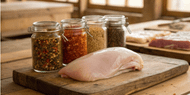
The Best Seasonings and Marinades for Turkey Breast
Posted by Copas Farm Shop on 2nd Nov 2026
The best seasoning for a turkey breast is a dry rub built on flaky sea salt, cracked black pepper, garlic, and a fat such as softened butter or olive oil, applied generously and left to penetrate the meat for at least an hour before roasting. A wet marinade, typically built on citrus, oil, and aromatics, suits boneless breast cooked at lower temperatures or on the grill, where the added moisture helps prevent drying. The right choice depends on whether you want a deeply savoury, crackling crust or a tender, herb-infused interior throughout.
This seasoning tip makes a delicious and healthy weeknight supper or a great Sunday roast option if looking for something a little different.
Key takeaways
- A dry rub of sea salt, black pepper, garlic and softened butter applied the night before delivers the deepest flavour and the crispest skin on a bone-in breast.
- Wet marinades work best on boneless turkey breast, where the meat benefits from extended soaking (4 to 24 hours) without a thick skin to penetrate.
- Salt is the single most important ingredient in any seasoning: it draws moisture to the surface, redissolves, and seasons the meat from the inside out.
- Acidity in a marinade (lemon juice, white wine, buttermilk) tenderises the outer layer but will make the surface mushy if left beyond 24 hours, watch the timing.
- Slow-grown, free-range turkey breast from a farm such as Copas Farm Shop has pronounced natural flavour; it responds best to seasonings that complement rather than mask the meat.
- A resting period of at least 20 minutes after roasting is as important as the seasoning itself, it allows juices to redistribute before carving.
Why does seasoning matter more for turkey breast than for other cuts?
Turkey breast is a lean, low-fat cut with very little connective tissue to melt down and baste the meat during cooking. Without deliberate seasoning, it can taste mild to the point of blandness and dry out quickly at roasting temperatures. This is not a flaw in the meat, it is a characteristic that rewards technique.
The absence of fat marbling means flavour must come from the surface inward, which is why salt applied early and a fat-based carrier (butter, olive oil) are non-negotiable. The same logic explains why a well-reared, slow-grown bird holds its flavour far better than a mass-produced one: denser muscle from genuine pasture time gives the seasoning something substantial to work with.
What is the best dry rub for a turkey breast roast?
A dry rub is the right starting point for any bone-in turkey breast that will go into a hot oven. The simplest version that consistently produces excellent results uses:
- 1½ tsp flaky sea salt per kg of breast weight
- 1 tsp freshly cracked black pepper
- 2 garlic cloves, crushed to a paste
- 75 to 100g softened unsalted butter
- 1 tsp fresh thyme leaves or ½ tsp dried
Blend these together, then work the mixture under the skin directly onto the flesh and rub the remainder over the surface. Leave the breast uncovered in the fridge for at least one hour, or overnight for a deeper result. The salt draws liquid out of the meat, mixes with the butter and aromatics, then is reabsorbed, seasoning the breast from within rather than sitting only on the surface.
Additions worth considering include smoked paprika for a gentle warmth and deeper colour, lemon zest to lift the richness without adding excess liquid, and finely chopped rosemary for a more assertive, resinous note that suits the colder months.
Which herbs and aromatics pair best with turkey breast?
Turkey breast has a clean, mild savouriness that suits a wide range of herbs without being overwhelmed. The pairings below are worth knowing by character rather than by recipe, so you can build a seasoning blend that suits the occasion.
Thyme is the most versatile choice: it has a gentle earthiness that deepens during roasting rather than burning off. Use it fresh under the skin or dried in a rub.
Rosemary brings a stronger, resinous quality that suits a long, slow roast. Use it sparingly, one sprig tucked into the cavity or a teaspoon of finely chopped leaves in the rub is usually enough.
Sage is the traditional British pairing with turkey. Its slightly bitter, camphor-like flavour cuts through richness and complements the savoury depth of a well-reared bird. Combine it with lemon and butter for a classic approach.
Tarragon is less expected but rewards the adventurous cook. Its mild anise note pairs well with a white wine or Dijon mustard marinade on boneless breast.
Bay leaf tucked inside the cavity perfumes the bird from the inside during roasting. It's a quiet addition that makes a measurable difference to the dripping and any gravy made from it.
How do wet marinades differ from dry rubs, and when should you use each?
| Approach | Best for | Timing | Limitation |
|---|---|---|---|
| Dry rub (butter or oil base) | Bone-in breast, oven roasting, crisp skin | 1 hour to overnight | Less penetration into thick, skin-on cuts |
| Wet marinade (citrus or yoghurt base) | Boneless breast, grilling, lower-temp cooking | 4 to 24 hours | Extended acid exposure makes surface mushy; removes skin crispness |
| Buttermilk brine | Boneless breast, advance prep, very tender result | 12 to 24 hours | Requires planning ahead; breast must be thoroughly dried before cooking |
| Compound butter (herb butter under skin) | Bone-in breast, classic roast, maximum flavour | Apply before roasting, rest 1 hour+ | Butter can burn at very high oven temperatures; reduce heat after first 20 minutes |
A wet marinade is the right choice when you're working with a boneless turkey breast that will cook at a lower temperature or on a griddle. The liquid penetrates more evenly through cut surfaces, and the acidity from lemon juice or white wine begins to break down the outer muscle fibres, improving tenderness.
For a roast turkey breast in a conventional oven, which is the most common preparation, a dry rub or compound butter gives a superior result. The oven's dry heat would evaporate most of the liquid marinade before it adds anything, while the skin would steam rather than crisp.
What is the best wet marinade for boneless turkey breast?
A simple, balanced wet marinade for a boneless breast (roughly 1 to 1.5kg) uses:
- 3 tbsp olive oil
- Juice of 1 lemon and 1 tsp finely grated zest
- 2 garlic cloves, finely grated
- 1 tbsp Dijon mustard
- 1 tsp fresh thyme leaves
- ½ tsp smoked paprika
- 1 tsp flaky sea salt and ½ tsp cracked black pepper
Whisk together, pour over the breast in a non-reactive dish or sealed bag, and refrigerate for a minimum of 4 hours. Remove from the marinade, pat the surface completely dry with kitchen paper, and allow the breast to come to room temperature for 30 minutes before cooking.
The Dijon mustard acts as an emulsifier, binding the oil and acid while contributing a rounded sharpness. The paprika adds colour and a faint sweetness. Crucially, drying the surface before cooking is essential, wet meat steams rather than sears, and the flavour created by proper browning is irreplaceable.
How should you season a turkey breast crown specifically?
A turkey breast crown, the breast left on the bone with the legs removed, benefits from a compound butter approach rather than a marinade. Because the crown retains its skin, the butter can be worked directly underneath, where it bastes the meat from the inside as it melts during roasting.
Use 100g softened butter combined with 2 crushed garlic cloves, 1 tbsp finely chopped sage, the zest of half a lemon, sea salt and black pepper. Loosen the skin gently from the breast with your fingers without tearing it, then push the butter mixture evenly across both sides of the breast under the skin. Rub any remaining butter over the skin surface.
Our existing guide on roasting temperatures covers the heat and timing in detail, at 190°C (170°C fan, gas mark 5), a crown will typically need 40 minutes per kg plus 20 minutes, with a final rest of at least 20 minutes before carving.
Are there any seasonal or occasion-specific seasoning ideas?
The occasion matters as much as the method. A Christmas or Thanksgiving table calls for a different character of seasoning than a summer supper or a lighter weeknight meal.
For a Christmas or festive roast, a classic compound butter with sage, thyme and lemon is the most dependable choice. The herbs carry the warmth of the season without competing with Christmas Trimmings such as cranberry sauce, bread sauce, or a rich turkey gravy. A small amount of orange zest in the butter adds a festive note without dominating.
For a summer or lighter preparation, a lemon, tarragon and white wine marinade on a boneless breast cooked at a lower temperature or finished on a griddle is well suited. The acidity feels appropriate for the season, and the result pairs well with salads and lighter accompaniments rather than roasted root vegetables.
For an everyday family roast, simplicity serves best. Salt, pepper, garlic and butter under the skin, with a halved lemon and a few sprigs of thyme in the roasting tin, delivers consistent results without requiring anything unusual.
Our farm meats range includes free-range chicken, goose and cockerel where the same seasoning and marinade tips works equally well beyond the Christmas season.
What are the most common seasoning mistakes to avoid?
Under-salting is the most frequent error, and the most damaging to the final result. Turkey breast needs a confident hand with salt; a breast that is correctly seasoned will not taste salty when cooked. The salt is doing structural work inside the muscle.
Applying seasoning too close to cooking is the second common mistake. A rub applied 10 minutes before roasting sits on the surface as a coating. The same rub applied the night before has penetrated the meat and become part of it. Even one hour makes a meaningful difference.
Over-marinating in an acid-heavy liquid is the third. Lemon juice and wine begin to denature the outer proteins within a few hours; beyond 24 hours, the texture of the surface becomes soft and slightly chalky, palatable, but noticeably degraded.
Finally, neglecting the resting period undoes careful seasoning. In practice, a breast carved immediately from the oven loses a significant proportion of its juices to the board. Twenty minutes of rest, loosely covered with foil, allows the muscle fibres to relax and the juices to redistribute. The seasoning built up carefully over hours is only fully expressed in the eating, and resting is the final step that makes it so.
Frequently Asked Questions
What is the best seasoning for a turkey breast roast? A dry rub of flaky sea salt, cracked black pepper, crushed garlic and softened butter, worked under the skin the night before roasting, is the most reliable approach for a bone-in breast. The butter carries the aromatics into direct contact with the flesh, and the extended rest allows the salt to penetrate deeply. Thyme, sage or lemon zest can be added to this base according to preference.
Should I marinate or dry-rub a turkey breast? For a bone-in breast going into a hot oven, a dry rub or compound butter delivers a better result than a wet marinade, the oven heat evaporates liquid before it contributes much flavour, and the skin crisps more reliably without the moisture. A wet marinade is the better choice for boneless breast that will be cooked at a lower temperature, grilled or sliced for a lighter dish.
How long should I leave seasoning on a turkey breast before cooking? A minimum of one hour is needed for surface-level flavour; overnight in the fridge is considerably better, as the salt draws moisture from the meat, mixes with the aromatics and is reabsorbed into the muscle. For a wet marinade on a boneless breast, 4 to 24 hours is the practical window, beyond 24 hours, acidic ingredients begin to degrade the surface texture.
Can I use the same marinade for turkey breast as I would for chicken? The core principles are the same: salt, fat, acid and aromatics. Turkey breast is leaner and denser than chicken breast, so it benefits from a slightly higher proportion of salt and a longer marinating time. Quantities designed for chicken can be increased by roughly 20 to 30 per cent by weight when applied to turkey, and the seasoning time extended accordingly.
What herbs go best with turkey breast? Thyme is the most versatile, it holds its character through roasting without burning. Sage is the traditional British choice and pairs particularly well with butter and lemon. Rosemary is worth including in smaller quantities alongside other herbs rather than as the dominant note, as it can become overpowering. Tarragon suits lighter, white-wine-based preparations on boneless breast.
Should I baste a seasoned turkey breast during roasting? Basting adds moisture and colour to the surface but washes away dry seasoning on each pass. If you have applied a compound butter under the skin, the breast bastes itself as the butter melts, additional basting is not essential. If you do baste, do so no more than twice during cooking, using the pan juices rather than additional liquid, to preserve the seasoned crust.
Does the quality of the turkey affect how it responds to seasoning? Meaningfully so. Copas's experience across four generations of rearing free-range turkey shows that a slow-grown breast has denser muscle, a more developed flavour and a firmer texture that holds seasoning well and produces richer pan drippings. A mass-produced breast with a higher water content will release that liquid during cooking, diluting the seasoning and producing a pale, steamed result rather than a roasted one. The difference is most visible in the pan and most evident on the plate.
Written by the team at Copas Farm Shop, a free-range poultry farm with four generations of experience rearing and preparing turkey in Buckinghamshire.