
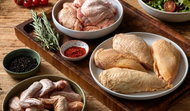
Your Complete Guide to a Proper Free-Range Chicken BBQ
Posted by Copas Farm Shop on 17th Aug 2026
A proper free-range chicken BBQ starts with slow-grown, pasture-raised birds that have developed genuine muscle and fat, the kind that holds up over indirect heat and delivers real depth of flavour. At Copas Farm Shop, we've seen that the single biggest difference between a good BBQ and a great one comes down to the chicken itself: welfare, breed, and how the bird was raised before it ever touched a grill.
Key Takeaways
- Free-range chickens need a minimum of 56 days to reach slaughter weight under UK free-range standards — slow growth produces firmer, more flavourful meat than fast-reared equivalents.
- Spatchcocking a whole free-range chicken (roughly 1.8–2.2 kg) reduces BBQ cook time from 90 minutes to approximately 50–60 minutes over indirect heat.
- Internal temperature for safe, juicy chicken is 74°C at the thickest point of the thigh — use a probe thermometer, not colour alone.
- Dry brining (salt only, no liquid) for 12–24 hours before cooking produces noticeably crispier skin on free-range birds.
- A two-zone fire — direct heat on one side, indirect on the other — is the most reliable method for cooking a whole free-range bird without burning the outside.
- Resting your chicken for a minimum of 10 minutes under loose foil after cooking redistributes juices and prevents a dry result.
What Makes Free-Range Chicken Better for a BBQ?
Free-range chicken has more developed muscle fibre and intramuscular fat than intensively reared birds, which means it handles high, sustained heat without drying out as quickly. The difference is most noticeable in thighs and legs — cuts that benefit from the exercise a pasture-raised bird gets daily.
Slower growth also means the skin is thicker and cures more evenly over a flame, producing a better char without splitting. Notably, birds grown for fewer than 42 days produce noticeably thinner skin that flares or tears on the grill — the extra weeks on open pasture make a measurable difference.
Flavour is the other factor. A fast-reared chicken raised on a standard diet tastes mild to the point of neutral. A slow-grown, free-range bird from mixed pasture has a fuller, slightly gamier base note — one that takes marinades well without being overwhelmed by them.
Which Cuts of Free-Range Chicken Are Best for the BBQ?
The best cuts for a BBQ are bone-in thighs and drumsticks, a spatchcocked whole chicken, and skin-on breasts cooked indirectly. Each suits a different occasion and skill level.
| Cut | Best for | Approx. Cook Time | Limitation |
|---|---|---|---|
| Bone-in thighs | Everyday grilling, high heat | 30–35 min indirect | Can be fatty — flare-ups if unattended |
| Drumsticks | Feeding a crowd, easy handling | 25–30 min indirect | Less meat per piece |
| Spatchcocked whole bird | Centrepiece, even cooking | 50–60 min two-zone | Requires decent grill size (55 cm+) |
| Skin-on breast (bone-in) | Lower-fat option | 35–40 min indirect | Dries quickly if overcooked |
| Wings | Starters, quick cook | 20–25 min direct | Low meat-to-bone ratio |
Thighs are the most forgiving for home cooks, the fat content gives you a buffer if timing slips. Breasts demand more precision: pull them at 70°C internal and let carryover heat do the final work.
How Do You Prepare Free-Range Chicken for a BBQ?
Preparation begins 12–24 hours before the grill goes on. The two most effective techniques are dry brining and letting the bird come fully to room temperature before cooking.
To dry brine, pat the chicken dry with kitchen paper, apply a generous, even coat of flaky sea salt (roughly 1 tsp per 500 g), and leave it uncovered on a rack in the fridge. The salt draws out surface moisture, then the chicken reabsorbs it as a concentrated brine. The result is seasoned meat throughout and skin that crisps rather than steams.
Remove the chicken from the fridge 45–60 minutes before cooking. Cold meat placed directly on a hot grill cooks unevenly, the outside chars while the inside remains underdone. Room temperature entry gives a more consistent result across a whole bird.
If you're using a marinade, apply it after the dry brine period and no more than 4 hours before cooking. Sugar-heavy marinades burn quickly, keep them for the last 10 minutes of cooking, brushed on as a glaze.
How to Set Up Your BBQ for Cooking Free-Range Chicken: Step by Step
Setting up a two-zone fire is the most reliable way to cook free-range chicken on a charcoal or gas BBQ. Direct heat alone at high temperature will burn the outside long before the inside is safe to eat.
- Light your coals — use a chimney starter and wait until the coals are fully ashed over (approximately 20–25 minutes). Never cook over naked flame or lighter fluid that hasn't fully burned off.
- Arrange a two-zone fire — push all lit coals to one half of the grill. This gives you a direct-heat zone (searing) and an indirect-heat zone (slow cooking) simultaneously.
- Place a drip tray under the indirect zone if cooking a whole bird. Fat dripping onto coals causes flare-ups that blacken skin without cooking the meat.
- Preheat the grill grate — lid on, vents open, for 5 minutes. A properly preheated grate reduces sticking and gives cleaner grill marks.
- Sear first on direct heat — 2–3 minutes per side, skin side down first, until you have visible colour.
- Move to indirect heat — finish the chicken here, lid on, until internal temperature at the thickest point of the thigh (not touching bone) reads 74°C.
- Rest before carving — transfer to a board, cover loosely with foil, and rest for 10–15 minutes. Cutting immediately loses up to 30% of the juices onto the board.
For gas BBQs, replicate the two-zone setup by leaving one or two burners off. The target ambient temperature inside a closed lid is 180–200°C.
What Are the Best Marinades and Rubs for Free-Range Chicken?
Free-range chicken has enough flavour to carry simple seasoning — restraint works better here than an over-spiced paste. A good rub or marinade should complement the bird's natural depth, not mask it.
Simple dry rub (works best on thighs and drumsticks): 1 tsp smoked paprika, 1 tsp ground cumin, ½ tsp garlic powder, ½ tsp dried thyme, 1 tsp flaky sea salt, ½ tsp black pepper. Apply directly to dry-brined skin at least 1 hour before cooking.
Herb and lemon marinade (whole spatchcocked bird or breasts): Zest and juice of 1 lemon, 3 tbsp olive oil, 2 crushed garlic cloves, a small bunch of fresh thyme or rosemary, salt and pepper. Marinate for 2–4 hours maximum — acid in the lemon begins to break down protein past 4 hours.
Honey and mustard glaze (applied in the final 10 minutes only): 2 tbsp wholegrain mustard, 1 tbsp honey, 1 tbsp apple cider vinegar, a pinch of salt. Brush on with 10 minutes remaining so the sugars caramelise without burning.
Avoid marinades that are predominantly oil on a very hot direct fire — the oil drips, flares, and deposits bitter, acrid residue on the skin.
How Long Does Free-Range Chicken Take to Cook on a BBQ?
Cook time depends on cut, bone-in versus boneless, and your setup — but internal temperature at 74°C is always the reliable measure, not colour or time alone. Pink juices don't always indicate undercooking in a free-range bird, and clear juices don't always mean safe.
A spatchcocked whole free-range chicken of 1.8–2.2 kg takes 50–60 minutes over a two-zone indirect fire at 180–200°C ambient. Bone-in thighs take 30–35 minutes. Drumsticks take 25–30 minutes. Boneless breasts take 18–22 minutes but demand close attention — they cross from perfectly cooked to dry in under 3 minutes.
A probe thermometer is a non-negotiable piece of kit for chicken on the BBQ. Instant-read models accurate to 1°C are available for under £20 from most kitchen retailers.
What Are the Most Common Mistakes When Barbecuing Chicken?
Cooking straight from the fridge is the most common error — it produces chicken that is charred outside and underdone at the bone. Always allow 45–60 minutes of resting at room temperature before the bird goes on.
Using direct heat only is the second most frequent mistake, particularly for whole birds and bone-in pieces. Direct heat alone at high temperature can't penetrate to the bone without burning the skin. Always use a two-zone setup and finish over indirect heat with the lid on.
Skipping the rest. Cutting into a chicken straight off the grill forces out the juices that have been driven toward the centre by heat. A minimum 10-minute rest under loose foil is not optional — it is the difference between a juicy bird and a dry one.
Under-seasoning. Free-range chicken has a thicker skin than a standard supermarket bird. Salt needs time and quantity to penetrate — a light sprinkle 10 minutes before cooking achieves very little. Dry brine for 12–24 hours, or season properly and early.
In our work with Copas clients, we've found that home cooks who switch to a probe thermometer and a two-zone fire see consistent results from the first cook — both changes together address almost every common failure point.
What Should You Serve with a Free-Range Chicken BBQ?
The right sides balance the richness of grilled, skin-on chicken without competing with it. Simple, fresh, and seasonally honest works best.
A simple green salad with a sharp vinaigrette cuts through the fat. Corn on the cob, grilled directly over the coals for 10–12 minutes, needs nothing more than butter and sea salt. New potatoes boiled and then finished cut-side down on the direct-heat zone develop a crisp base without requiring a separate pan.
If you're planning a larger spread, Copas's range of farm meats extends well beyond chicken — slow-grown free range lamb cuts are particularly well suited to low-and-slow BBQ cooking alongside a whole bird.
For bread, a good sourdough or flatbread warmed briefly on the grill absorbs the resting juices from the board — do not let those go to waste.
How Do You Store and Handle Free-Range Chicken Safely Before a BBQ?
Store raw free-range chicken in the fridge at 1–4°C, on the bottom shelf, away from ready-to-eat foods. If you're dry brining, leave the chicken uncovered on a rack — airflow speeds surface drying and improves skin texture.
Do not wash raw chicken before cooking. Washing spreads Campylobacter bacteria via water splash onto surrounding surfaces — cooking to 74°C internal kills pathogens reliably without washing.
Use separate boards and utensils for raw chicken and cooked chicken. Cross-contamination after cooking is as serious a risk as undercooking. Tongs that touched raw chicken should not touch cooked pieces unless washed in between.
Leftover cooked chicken should be refrigerated within 2 hours of cooking and consumed within 2 days. Reheat thoroughly to 74°C if serving again — do not reheat more than once.
Frequently Asked Questions
Do I need to marinate free-range chicken before a BBQ? No — a good free-range bird has enough natural flavour to work well with just a dry brine and a simple rub. If you do marinate, limit it to 2–4 hours. Acid-based marinades (lemon, vinegar) begin to break down the protein past this point and can produce a mushy texture rather than a clean bite.
What is the safest internal temperature for BBQ chicken? 74°C at the thickest part of the thigh or breast, measured with a probe thermometer and not touching bone. At this temperature, the meat is safe to eat and still retains moisture if you rest it properly for 10–15 minutes before serving.
How do I stop chicken skin from burning on the BBQ? Use a two-zone fire and cook bone-in pieces over indirect heat for the majority of the time, moving to direct heat only at the start or end for colour. Avoid sugar-heavy marinades during the main cook — glaze in the final 10 minutes only. A drip tray under the indirect zone prevents fat from hitting hot coals.
Can I cook a whole chicken on a standard kettle BBQ? Yes — a standard 57 cm kettle BBQ is sufficient for a spatchcocked whole free-range chicken of up to 2.2 kg. Spatchcocking (removing the backbone and pressing the bird flat) reduces height and allows the lid to close fully, creating an oven-like environment.
Is free-range chicken more expensive for a BBQ than standard chicken? Free-range chicken costs more per kilogram than intensively reared equivalents — a quality whole bird typically runs £12–£18 depending on weight and source. The trade-off is flavour, texture, and welfare. When feeding a larger group, bone-in thighs offer good value and forgiveness on the grill.
How far in advance can I prepare chicken for a BBQ? You can dry brine up to 24 hours ahead. If using a marinade, apply it no more than 4 hours before cooking. The chicken should come out of the fridge 45–60 minutes before it goes on the grill. Prepping the day before and dry brining overnight is the single most useful step most home cooks skip.
What wood chips work well with free-range chicken on a BBQ? Apple and cherry wood chips produce a mild, slightly sweet smoke that suits chicken well without overpowering it. Hickory is stronger — use it sparingly, roughly 25 g over the coals, to avoid a bitter result. Soak chips in cold water for 30 minutes before adding to coals so they smoulder rather than ignite.
Can I BBQ free-range chicken pieces from frozen? No — never cook chicken from frozen on a BBQ. The outside will reach temperature and char long before the inside is safe. Always defrost fully in the fridge (allow 24 hours per 1 kg of weight), then bring to room temperature before cooking.