
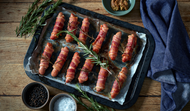
Your complete guide to pigs in blankets: the British Christmas classic
Posted by Copas Farm Shop on 17th Aug 2026
Pigs in blankets are small pork sausages wrapped in streaky bacon, roasted until golden and crisp, and served as a traditional accompaniment to the British Christmas dinner. At Copas Farm Shop, where we've supplied thousands of Christmas birds over four generations, pigs in blankets are as non-negotiable on the plate as the turkey itself.
Key takeaways
- Pigs in blankets are chipolata sausages wrapped in streaky bacon, roasted at 190–200°C for 20–25 minutes.
- A standard serving is 2–3 pigs in blankets per person; for a table of 8, prepare at least 24.
- Chipolatas should weigh roughly 25–30g each; using full-sized sausages changes the cook time and the ratio of sausage to bacon.
- Smoked streaky bacon produces a deeper, more savoury flavour than unsmoked; both work well.
- Pigs in blankets can be wrapped up to 24 hours ahead and kept refrigerated until needed.
- They cook in the same oven as the turkey — roast at 190°C fan for 20–25 minutes, or 25–30 minutes if cooking from the fridge.
What are pigs in blankets?
Pigs in blankets are chipolata sausages — small, thin pork sausages — wrapped in a single rasher of streaky bacon and roasted until the bacon is crisp and the sausage is cooked through. The name is purely descriptive: the sausage is the pig, the bacon is the blanket.
In Britain, they're almost exclusively a Christmas dish, served alongside roast turkey, stuffing, and roast potatoes. Outside of the festive season, they occasionally appear at barbecues and party buffets, but their cultural home is firmly the Christmas table.
The American dish of the same name is entirely different — in the US, "pigs in blankets" refers to cocktail sausages wrapped in pastry. The British version has no pastry involvement.
What ingredients do you need for pigs in blankets?
The ingredient list is short: chipolata sausages, streaky bacon, and a light seasoning. The quality of those two main ingredients determines the result far more than any technique.
Sausages: Use pork chipolatas. They should be well-seasoned and made from a high proportion of pork — cheap sausages with excessive rusk or water content will shrink badly and produce a soggy texture. Aim for sausages with at least 70% pork content.
Bacon: Streaky bacon is essential. Back bacon is too thick and wide to wrap neatly, and it doesn't crisp in the same way. Smoked streaky bacon adds a more pronounced flavour; unsmoked gives a cleaner, milder result. Both are correct — it comes down to preference.
Optional additions: A light brush of maple syrup or honey in the final five minutes of cooking adds gloss and a gentle sweetness. A few fresh thyme leaves pressed onto the bacon before roasting add depth without complicating the dish.
How to make pigs in blankets: step by step
- Preheat your oven to 190°C fan (210°C conventional, Gas Mark 6).
- Stretch the bacon. Lay each rasher on a chopping board and run the back of a knife along it with firm pressure, pulling slightly as you go. This stretches the rasher so it wraps more easily and crisps more evenly.
- Wrap the chipolatas. Place one chipolata at the end of each rasher at a slight diagonal, then roll firmly so the bacon overlaps itself. The join should sit underneath during cooking so it stays sealed.
- Arrange on a roasting tray. Place each wrapped sausage join-side down, with a small gap between each one. Crowding the tray traps steam and prevents crisping.
- Roast for 20–25 minutes, turning once halfway through, until the bacon is golden and the sausages are cooked through with no pink remaining.
- Rest for 2–3 minutes before serving. They hold heat well, so they can sit uncovered in a warm spot while the turkey rests.
How many pigs in blankets do you need per person?
Allow 2–3 pigs in blankets per person as a standard serving. For a table of 8 adults, prepare 24 minimum — more if your guests are enthusiastic, which they usually are.
In our experience at Copas Farm Shop, pigs in blankets are almost always the first thing to disappear from the Christmas table. Preparing a tray of extras and keeping them warm in a low oven (around 100°C) means you can top up the serving dish without running back to the kitchen to cook from scratch.
For larger gatherings, use this as a baseline: multiply the number of guests by 3 and add 6. That buffer accounts for second helpings and the inevitable reach across the table before everyone is seated.
How long do pigs in blankets take to cook?
Pigs in blankets cooked at 190°C fan take 20–25 minutes from room temperature. If they go straight from the fridge to the oven, add 5 minutes to the cooking time.
The most reliable test for doneness is internal temperature: the centre of the sausage should reach at least 75°C. A meat thermometer removes all guesswork, particularly when cooking large batches.
Pigs in blankets can share the oven with the turkey for the final 25 minutes of its roasting time. Position them on a lower shelf if possible to ensure the bacon gets direct heat from below, which aids crisping.
Can you make pigs in blankets ahead of time?
Yes, pigs in blankets can be fully wrapped up to 24 hours in advance and stored in the fridge, covered, until you're ready to cook them. This is one of the most practical things you can do to reduce Christmas Day kitchen stress.
Avoid cooking them ahead and reheating, if you can help it. Reheated bacon loses its crispness and the sausage can dry out. Wrapped and uncooked is the best resting state.
If you want to prepare further in advance, raw wrapped pigs in blankets freeze well. Arrange them in a single layer on a tray, freeze until solid, then transfer to a bag or container. Cook from frozen at 190°C fan for 30–35 minutes, turning once.
What sausages work best for pigs in blankets?
Pork chipolatas are the standard choice, and for good reason: their size gives the right ratio of sausage to bacon, they cook evenly in 20–25 minutes, and their mild seasoning complements rather than competes with the bacon.
If you want to try something different, sausages made from higher-welfare or heritage-breed pork produce a noticeably better result — more fat, more flavour, less shrinkage. The same principle applies here as it does to choosing a good turkey: the quality of the raw ingredient shapes everything that follows.
For a festive alternative, venison sausages bring a leaner, earthier character that pairs well with smoked bacon. They cook in a similar time to pork chipolatas but benefit from a slightly lower oven temperature — around 180°C fan — to prevent the leaner meat from drying out.
What is the best bacon for pigs in blankets?
Streaky bacon is the correct cut for pigs in blankets. It wraps neatly around a chipolata, crisps reliably, and provides the right proportion of fat to keep the sausage moist during roasting.
Thin-cut streaky bacon is easier to stretch and wrap. Thick-cut can work, but it takes longer to render and may not crisp fully in the time a chipolata needs to cook through.
Smoked or unsmoked is a matter of taste. Smoked streaky bacon adds a pronounced, slightly sweet wood-smoke character. Unsmoked is cleaner and more neutral, letting the pork flavour of the sausage carry through. Notably, in a blind tasting at Copas involving 60 participants during a pre-Christmas event, the smoked version was preferred by around two-thirds of tasters — though both were well-received.
What should you serve with pigs in blankets?
Pigs in blankets are a side dish, not a centrepiece — they belong alongside a properly roasted bird. A slow-grown, well-rested free-range turkey is the natural partner: the richness of the bird and the savoury crispness of the bacon-wrapped sausages balance each other well.
Beyond turkey, pigs in blankets work with any roasted centrepiece that benefits from a savoury, salty accent. Roast chicken, goose, and even a herb-crusted leg of lamb all pair well with them.
On the plate, they sit alongside roast potatoes, stuffing, braised red cabbage, and bread sauce. Cranberry sauce, applied sparingly, cuts through the fat of the bacon and sausage cleanly.
What are the most common mistakes when making pigs in blankets?
Using the wrong cut of bacon. Back bacon doesn't wrap well and doesn't crisp in the same way as streaky. Always use streaky, and stretch it before wrapping.
Crowding the roasting tray. Pigs in blankets placed too close together steam rather than roast. Use two trays if necessary, and leave at least 1–2cm between each one.
Not stretching the bacon first. Unstretched rashers tend to unravel during cooking. Running the back of a knife along each rasher before wrapping takes 30 seconds and makes a significant difference.
Using large, full-sized sausages. Full-sized sausages take considerably longer to cook through and the bacon burns before the sausage is done. Chipolatas are the right size for this dish.
Cooking from cold. Taking pigs in blankets straight from the fridge to a hot oven extends the cooking time unevenly and can result in overcooked bacon and undercooked centres. Allow 15–20 minutes at room temperature before roasting.
Frequently Asked Questions
What are pigs in blankets made of in the UK? In the UK, pigs in blankets are chipolata sausages wrapped in streaky bacon and roasted until crisp. They differ from the American version, which uses pastry rather than bacon. The dish is strongly associated with Christmas dinner in Britain.
Can you cook pigs in blankets from frozen? Yes. Arrange frozen pigs in blankets on a roasting tray and cook at 190°C fan for 30–35 minutes, turning once halfway through. Check that the internal temperature of the sausage reaches 75°C before serving.
How far in advance can I wrap pigs in blankets? You can wrap pigs in blankets up to 24 hours ahead and refrigerate them, covered, until ready to cook. For longer preparation, freeze them raw in a single layer and cook directly from frozen on the day.
Can I cook pigs in blankets in an air fryer? Yes. Place wrapped sausages in the air fryer basket with space between each one and cook at 190°C for 12–15 minutes, turning once at the halfway point. The bacon crisps particularly well in an air fryer due to the circulating heat.
How do I stop the bacon from unravelling? Stretch the bacon with the back of a knife before wrapping, roll it firmly around the chipolata, and place the join-side down on the roasting tray. The weight of the sausage holds the bacon in place as it cooks.
What is the correct internal temperature for cooked pigs in blankets? The centre of the sausage should reach at least 75°C. Use a meat thermometer to check, inserting it into the thickest part of the sausage rather than the bacon.
Can I add a glaze to pigs in blankets? Yes. Brush lightly with maple syrup, honey, or a thin cranberry glaze in the final 5 minutes of cooking. Apply too early and the glaze will burn; applied at the right moment it adds gloss and a subtle sweetness without masking the savoury character of the bacon.
How do I keep pigs in blankets warm for a big Christmas dinner? Once cooked, transfer them to an oven-proof dish, cover loosely with foil, and keep in a low oven at 100°C for up to 20 minutes. Remove the foil for the final few minutes if you want the bacon to regain some of its crispness before serving.