
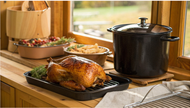
Can I Make a Turkey Breast Roast in a Slow Cooker or Does It Need to Go in the Oven?
Posted by Copas Farm Shop on 16th Nov 2026
A turkey breast roast can be cooked successfully in a slow cooker, an oven, or an air fryer. The slow cooker produces exceptionally moist, tender meat with minimal attention; the oven delivers the browned, crisp exterior most people expect from a roast; the air fryer offers a faster route to a well-coloured surface with very little fuss. Your choice depends on the occasion, the time available, and what you want on the plate.
Key takeaways
- A slow cooker turkey breast roast typically takes 4 to 6 hours on low, or 2 to 3 hours on high, and requires no basting.
- An oven roast at 180°C (160°C fan) produces a golden, lightly crisped surface that a slow cooker cannot replicate.
- An air fryer roasts a turkey breast quickly at high circulating heat, producing a well-browned exterior in a fraction of the oven time.
- No single method is inherently superior: the slow cooker suits weekday ease; the oven suits a proper Sunday or celebratory table; the air fryer suits speed without sacrificing surface colour.
- A well-reared, free-range bird performs better in all three methods; the depth of flavour built through slow growth is a greater advantage than any cooking technique alone.
- Carryover cooking is especially important for slow-cooker joints; always verify an internal temperature of 74°C at the thickest point before serving.
Does a turkey breast roast actually work in a slow cooker?
Yes, it works well, and for one specific reason: the slow cooker holds a steady, gentle heat that prevents the breast meat, naturally lower in fat than the leg, from drying out. The moist, enclosed environment does the work that basting would otherwise do in an oven.
The result is meat that pulls apart cleanly and holds its juices well when carved. What it lacks is any surface colour. Slow cookers can't generate the high, dry heat required for browning, so the skin, if present, stays pale and soft.
What does the oven do better?
The oven creates conditions the slow cooker simply cannot match. Dry, circulating heat above 180°C triggers the Maillard reaction, the process that browns the surface of the meat and develops the savoury, roasted flavour most people associate with a proper joint. That surface crust is not purely aesthetic; it carries a significant proportion of the overall flavour.
Oven roasting also produces the drippings that form the base of a proper pan gravy, a point covered in depth in our guide to making gravy from turkey breast drippings. A slow cooker produces cooking juices, but they're more dilute and less concentrated in flavour.
What does the air fryer do?
The air fryer sits between the slow cooker and the oven in terms of approach. It circulates hot air at high speed around the joint, producing a browned, lightly crisped exterior in considerably less time than a conventional oven. A turkey breast roast of around 1kg will typically cook through in 45 to 60 minutes at 180°C, depending on the model.
The result is notably good surface colour and a relatively moist interior, provided the joint is not overcooked. The air fryer is particularly well suited to smaller boneless breast joints; larger or bone-in cuts may not fit comfortably in the basket, and the reduced capacity can limit airflow. As with the oven, it is worth checking the internal temperature at the thickest point, which must reach 74°C before serving.
One limitation is that the air fryer produces minimal drippings, so it is less suited to occasions where a rich pan gravy is part of the meal. For a quicker midweek roast where speed and ease matter, it performs very well.
Slow cooker vs oven vs air fryer: a direct comparison
| Slow cooker | Oven | Air fryer | |
|---|---|---|---|
| Best for | Weekday meals, hands-off cooking | Sunday roast, celebratory meals | Quick roasts, smaller joints |
| Cooking time | 4 to 6 hours on low; 2 to 3 hours on high | Approximately 20 minutes per 500g at 180°C (160°C fan), plus resting | Approximately 45 to 60 minutes at 180°C for a 1kg joint |
| Surface texture | Soft, pale skin; no crust | Golden, lightly crisped skin | Well-browned, crisped skin |
| Moisture retention | Excellent | Good, with correct resting | Good, with careful timing |
| Gravy potential | Light juices; needs reduction | Rich drippings; ideal for pan gravy | Minimal drippings |
| Attention required | Minimal once started | Periodic checking; basting optional | Minimal; check temperature towards end |
| Limitation | No browning; skin should be removed before serving | Requires more active management | Limited capacity; not ideal for large joints |
Which method suits your occasion?
Choose the slow cooker when time and simplicity are the priority. A turkey breast roast set on low before work is ready by early evening, and the meat will be tender without any intervention. It suits a smaller household meal or an occasion where visual presentation matters less than ease.
Choose the oven when you are cooking for a table. The browned surface, the aroma as the joint roasts, and the drippings for gravy are part of what makes a roast feel considered. For a dinner party or a family occasion, the oven delivers a result that the slow cooker can't fully replicate in terms of presence on the plate.
Choose the air fryer when speed is the priority and the joint is on the smaller side. It produces an impressive surface colour quickly and requires very little attention, making it a practical choice for a weeknight meal that still feels like a proper roast.
For a boneless turkey breast roast, all three methods are straightforward. For a bone-in joint, the oven tends to manage the uneven shape more reliably, a point explored in more detail in our comparison of bone-in and boneless turkey breast roasts.
Can you combine methods?
Yes, and it is worth considering if you want the moisture of slow cooking with some surface colour. Cook the breast in the slow cooker first, then transfer it to a hot oven at 220°C (200°C fan) or into the air fryer at 200°C for 15 to 20 minutes to colour the surface before serving. Both finishing methods require attention to timing, but the result gives you the best of two approaches: deeply moist meat with a properly browned exterior.
Does the quality of the bird change the equation?
Importantly, it does, and significantly. A turkey breast from a slow-grown, free-range bird carries more intramuscular flavour and holds its moisture better under heat, whether in a slow cooker, an oven, or an air fryer. A bird reared in high-welfare conditions, given space and time to develop, will produce a noticeably richer result regardless of method.
At Copas Farm Shop, our Turkey is reared on open pasture and given the time to develop properly. That depth of flavour, built through slow growth and care since 1957, is something no cooking technique alone can manufacture. If you are sourcing a bird worth cooking carefully, our farm meats are prepared with exactly that standard in mind.
Whether you choose the slow cooker for a midweek meal, the oven for a Sunday table, or the air fryer for a quick and flavourful roast, begin with a bird that is worthy of the method. Browse our turkey range to find the right joint for your occasion, and cook it with the confidence it deserves.
Frequently Asked Questions
Do I need to add liquid to a slow cooker when cooking turkey breast? A small amount of liquid, around 100 to 150ml of stock or water, prevents the bottom of the joint from catching and helps maintain a moist environment. It is not necessary to fully submerge the breast; the steam generated from even a small quantity of liquid is sufficient.
Should I remove the skin before slow cooking a turkey breast? Removing the skin is advisable if you plan to serve the joint directly from the slow cooker, as the skin will not crisp and can have an unappealing texture once steamed. If you intend to finish the joint in a hot oven or air fryer afterwards, leave the skin on so it can colour during the final stage.
What internal temperature should a slow-cooked turkey breast reach? The internal temperature at the thickest part of the joint must reach 74°C before the meat is safe to serve. Use a probe thermometer rather than relying on cooking time alone, as joint sizes vary and slow cookers differ in their output.
Can I use slow cooker juices to make a gravy? Yes, though the juices will be more dilute than oven drippings. Pour them into a small saucepan, bring to a simmer, and reduce by roughly half before whisking in a small amount of cornflour or plain flour to thicken. Season well; the flavour improves considerably once concentrated.
Is a slow-cooked turkey breast suitable for carving at the table? It can be carved, but the texture is softer, and the meat tends to pull rather than slice cleanly in the way an oven-roasted joint does. For a table setting where presentation matters, the oven remains the better choice; for a relaxed, informal meal, the slow cooker is entirely suitable.
Can I cook a turkey breast roast from frozen in an air fryer? It is not advisable. The air fryer's rapid heat browns the exterior quickly, which can leave the centre undercooked if the joint has not been fully thawed. Always ensure the turkey breast is completely defrosted and at room temperature for 30 minutes before cooking by any method.