
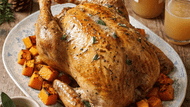
Roast Whole Turkey with Sage Butter, Cider & Butternut Squash
Posted by Copas Farm Shop on 23rd Sep 2026
When you've got a really good free-range whole turkey, you don't need to save it for Christmas. I always think the best autumn cooking is unfussy, and this is a perfect example. A golden, crisp-skinned bird, sage butter tucked under the skin, a splash of dry cider in the tin and a tray of caramelised squash and apple alongside. It's a proper Sunday lunch for a crowd, with the house smelling wonderful.
A whole turkey is one of the easiest roasts to get right when you start with a well-reared bird. The sage and thyme butter keeps the meat juicy and gives the skin a lovely colour, while the cider and onions in the tin turn into a rich, glossy gravy with very little effort.
Serves 8 to 10 | Prep 30 minutes | Cook about 3 to 3 hours 30 minutes, plus 30 to 60 minutes resting
Ingredients
For the turkey
- 1 free-range whole turkey, 5 to 6kg
- Flaky sea salt and freshly ground black pepper
For the sage and thyme butter
- 100g softened butter
- 10 fresh sage leaves, finely chopped
- 2 tbsp fresh thyme leaves
- 1 tbsp wholegrain mustard
For the cavity and the tin
- 1 onion, halved
- 1 eating apple, quartered
- 6 sage leaves and 4 sprigs of thyme
- 3 red onions, cut into wedges
- 8 garlic cloves, left unpeeled
- 300ml dry cider
- 300ml chicken stock
To roast alongside
- 2 medium butternut squash (about 1.5kg in total), peeled and cut into 3cm chunks
- 3 eating apples, cored and cut into wedges
- 2 tbsp olive oil
- 1 tbsp honey
- 10 fresh sage leaves
For the gravy
- Reserved juices from the roasting tin
- 100ml chicken stock
- 1 tbsp wholegrain mustard
- 1 tsp honey
- 2 tbsp crème fraîche (optional)
Ideal To Serve With
- Crisp roast potatoes
- Buttered kale or Brussels sprouts
- Pigs in blankets
- Fresh crusty bread, for the gravy
Method
- Take the turkey out of the fridge and leave it at room temperature for up to 2 hours before cooking. Heat the oven to 160°C fan (180°C conventional, gas 4). Remove the trussing band, pat the skin dry with kitchen paper and place the bird in a large roasting tin.
- Beat the butter with the chopped sage, thyme and mustard. Gently ease your fingers between the breast skin and the meat and spread most of the butter underneath, rubbing the rest over the skin. Season generously with salt inside and out, and add pepper. Fill the cavity with the halved onion, quartered apple, sage and thyme.
- Scatter the red onion wedges and garlic around the turkey. Pour the cider and stock into the tin, around the bird rather than over it, so the skin stays dry.
- Roast for around 3 to 3 hours 30 minutes, depending on the weight of your bird. There's no need to baste, flip or cover it with foil. If the tin looks dry towards the end, add a splash of water.
- The turkey is ready when the pop-up timer pops, or a thermometer in the thickest part of the breast reads 68°C and the juices from the thigh run clear. Lift it onto a board or platter and leave it to rest, uncovered, for at least 30 minutes and up to an hour.
- While the turkey rests, raise the oven to 190°C fan (210°C conventional, gas 7). Toss the squash and apple with the olive oil, honey and sage on a large baking tray and roast for 35 to 40 minutes, until tender and caramelised at the edges.
- Strain the tin juices into a pan, squeezing the soft roasted garlic from its skins into the liquid and skimming off any excess fat. Add the extra stock, mustard and honey and simmer for a few minutes until glossy and lightly thickened. Stir in the crème fraîche, if using, and adjust the seasoning. Carve the turkey and serve with the squash, apples and gravy.
My Roasting Tip
Resist the urge to carve straight away. Resting lets the juices settle back into the meat, and the turkey keeps cooking gently in its own heat without drying out. Leave it uncovered too, because foil traps steam and softens the skin you've worked so hard to crisp.
You can mix the sage butter a day ahead and keep it in the fridge, which makes the day itself much calmer. If you don't have any cider, a dry white wine works just as well. For more on getting the best from your bird, take a look at our guide to how to cook turkey perfectly every time.
The Perfect Turkey for a Sunday Roast
This is the kind of recipe where the quality of the bird really matters. A slow-grown, free-range turkey that's been raised with care has the depth of flavour to carry a simple roast, so you don't need heavy seasoning or complicated techniques, just a few good ingredients and a little patience. A 5 to 6kg bird feeds around 8 people comfortably, with a little left over for the days that follow.
Any leftovers are a gift. Shred the meat into a pie, toss it through pasta with a spoonful of the gravy, or pile it into sandwiches with a little cranberry sauce. For more ideas beyond the festive season, read our guide to turkey beyond Christmas.
Frequently Asked Questions
How long does it take to roast a whole turkey?
A 5 to 6kg whole turkey takes roughly 3 to 3 hours 30 minutes at 160°C fan (180°C conventional, gas 4), plus 30 to 60 minutes of resting. Cooking time depends on the weight of the bird and your oven, so use the pop-up timer or a thermometer to confirm it's ready rather than relying on the clock alone.
What temperature should a whole turkey be cooked to?
A whole turkey is cooked when the thickest part of the breast reaches 68°C and the juices run clear from the thigh. The turkey continues to cook in its residual heat as it rests, so it stays juicy rather than overcooking. A pop-up timer, if your turkey comes with one, will pop when the bird is ready.
Do you need to baste or cover a whole turkey?
No. A well-reared, mature turkey has a layer of fat beneath the skin that melts into the meat as it roasts, so there's no need to baste, flip or cover it with foil. Leaving it uncovered gives you crisp, golden skin. Simply season well, roast, and rest the bird uncovered for at least 30 minutes.
How do I store and reheat leftover turkey?
Cool leftovers quickly, then keep them covered in the fridge and eat within two days. Reheat gently in a covered pan or oven with a splash of the gravy, until piping hot all the way through. The cooked meat can also be frozen for up to three months and thawed in the fridge before reheating. For ideas on using it up, see our cooking, carving and leftovers guide.